

 English




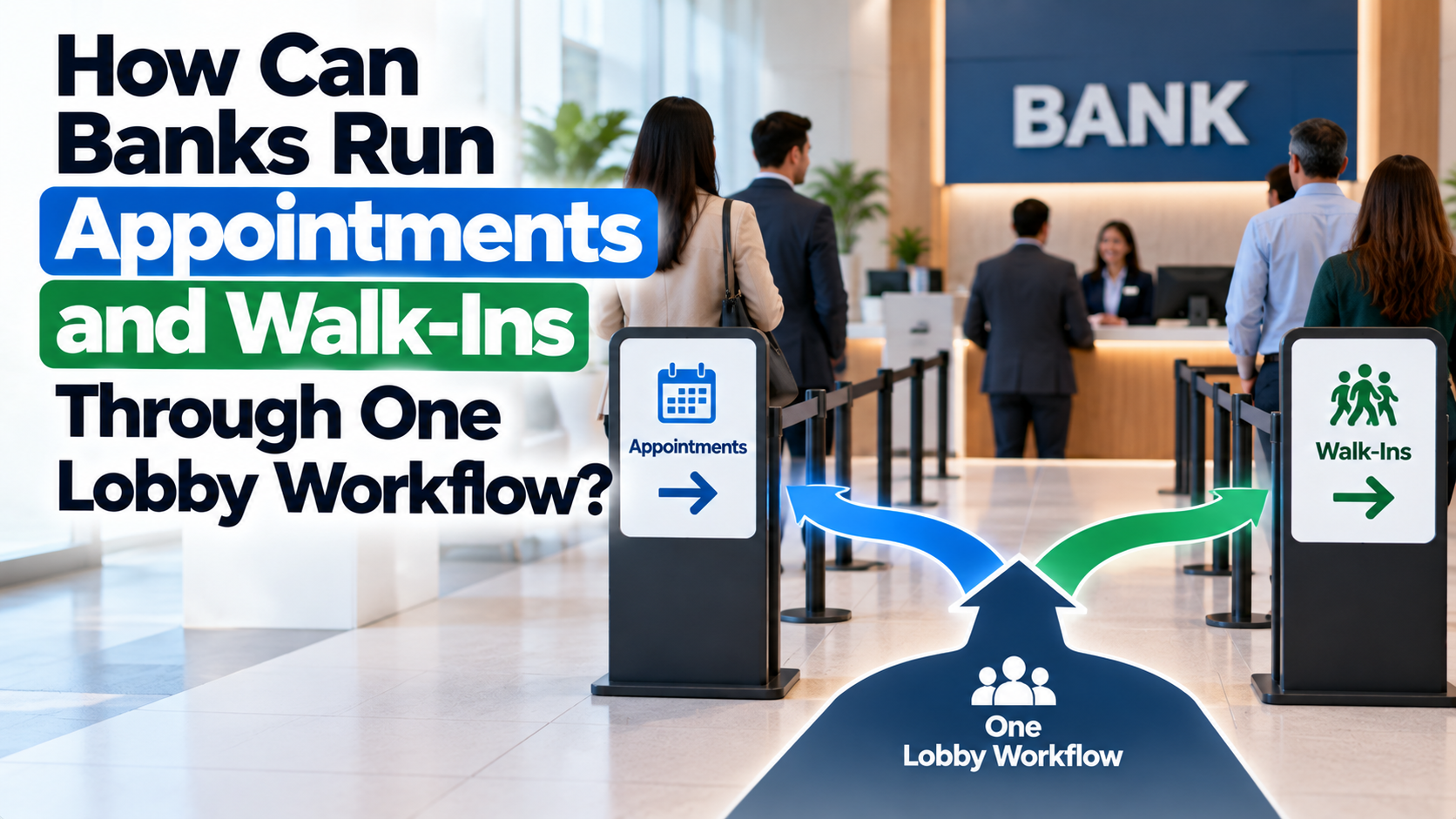






































































































































































































































































































































































































































































































































































































































































































































































































































































































































































































































































































































































































































































































































































































































































































































































































































































How Can Banks Run Appointments And Walk-Ins Through One Lobby Workflow?


Banks can manage appointments and walk-ins through a lobby management system for banks that combines customer check-in, queue management, advisor routing, and real-time lobby visibility.
Customers with appointments can confirm their arrival, while walk-in visitors can select a service and join the appropriate queue. Branch employees can view both groups in one place, identify available advisors, and direct customers according to service requirements. This unified approach reduces disconnected processes, improves visibility into waiting times, and helps banks allocate staff more effectively.
Effective bank lobby management does not require treating every visitor identically. It requires a consistent workflow that respects scheduled appointments while accommodating walk-in demand. Banks can use lobby management software to coordinate visits, monitor service performance, and deliver a more organized branch experience.
Why Should Banks Manage Appointments and Walk-Ins Together?
Banks should manage appointments and walk-ins together to reduce waiting times, improve staff coordination, and provide consistent customer service.
A unified bank lobby management workflow helps banks:
- Improve visibility: Track scheduled appointments and walk-in customers in one place.
- Manage queues efficiently: Direct customers to available employees based on service needs.
- Balance staff workloads: Adjust employee availability to handle changing customer traffic.
- Reduce delays: Identify waiting customers and prevent missed handoffs.
- Improve customer experience: Keep visitors informed about queue status and service availability.
The objective is to coordinate customer visits without compromising appointment commitments or ignoring walk-in needs. A connected workflow helps branch teams make informed decisions while maintaining a consistent customer experience.
How Does a Unified Lobby Management Workflow Work?
A unified workflow connects five essential stages: check-in, queue assignment, customer routing, waiting-time communication, and service completion.
1. Provide Convenient Customer Check-In
Customers need a straightforward way to enter the branch workflow.
Banks can offer digital check-in, online queue entry, or self-service kiosks, depending on their technology and branch requirements. Customers with appointments can confirm their arrival, while walk-ins can select the service they need.
For example, a customer attending a scheduled mortgage consultation can check in and confirm the appointment. Another customer requesting account assistance can join the appropriate queue without booking a meeting first.
A lobby management system for banks should capture only the information needed to organize the visit. Service categories and relevant check-in questions help staff understand customer requirements before the interaction begins.
2. Combine Appointments and Walk-Ins in One Queue View
After check-in, employees need a consolidated view of scheduled appointments and walk-in visitors.
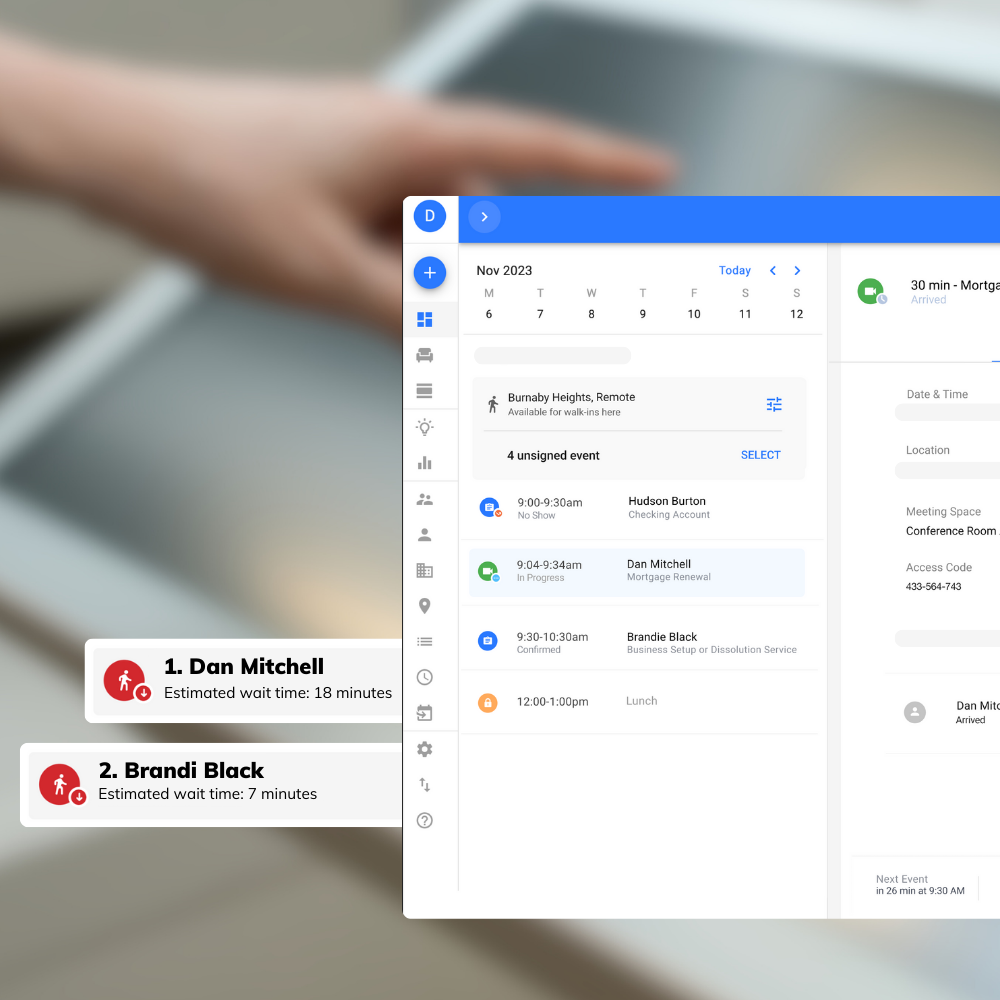
A bank queue management system can help staff monitor customer arrivals, waiting status, requested services, and advisor assignments when these features are supported. This shared view reduces the need to switch between disconnected tools.
For example, employees can see that an appointment customer has arrived while several walk-ins are waiting for routine banking assistance. They can coordinate service based on appointment times, employee availability, customer needs, and branch policies.
The queue should not automatically treat every visit as identical. Banks need clear rules for prioritizing scheduled meetings, accommodating urgent requests, and directing customers to appropriate employees.
3. Route Customers to the Right Advisor
Customers should reach employees who can handle their specific requirements.
A queue management system in banks can support service-based routing by matching customer requests with available staff and relevant expertise. A routine account query may go to a general banking representative, while a mortgage consultation requires an appropriately qualified specialist.
Routing rules should reflect branch operations and appointment commitments. If the right employee is unavailable, staff can offer an alternative appointment, callback, or another suitable service channel.
This approach helps employees prepare for customer interactions and reduces unnecessary transfers between departments.
4. Communicate Waiting Times Clearly
Customers need to understand what happens after they check in.
Lobby management software can support estimated waiting times, queue status displays, and notifications through available communication channels. Banks should explain when customers can expect an update and provide clear instructions if delays occur.
For example, a walk-in customer waiting for account assistance could receive a notification when their turn approaches, where supported. A customer with a scheduled meeting could receive confirmation that the branch has registered their arrival.
Clear communication helps customers plan their time and reduces repeated inquiries about queue status. Banks should present estimates as estimates, not guaranteed service times.
5. Track Service Completion and Follow-Up
The workflow should continue until the visit is completed or a follow-up arrangement is recorded.
Employees can update visit status, record appropriate service outcomes, and arrange another appointment when necessary. These updates help prevent missed handoffs and give managers a clearer picture of branch activity.
Banks should protect customer information throughout the process. Access controls, appropriate data retention, and secure integrations are important when connecting lobby tools with appointment or customer relationship management systems.
What Features Should Banks Look for in Lobby Management Software?
Banks should evaluate features according to their branch operations and customer needs.
- Unified queue visibility: Display appointments and walk-ins in one operational view.
- Flexible check-in: Support scheduled arrivals and unscheduled visits.
- Service-based routing: Connect customers with suitable employees.
- Customer notifications: Communicate queue progress and appointment updates.
- Reporting and analytics: Measure waiting times, visit volumes, and service demand.
- System integration: Connect relevant appointment, customer relationship management, and branch systems where supported.
- Privacy and access controls: Protect customer information and limit access to authorized employees.
The right lobby management system for banks should support existing branch processes while providing enough flexibility to handle changing customer traffic.
How Can Banks Use Lobby Data to Improve Branch Operations?
A unified workflow can help managers understand when customers arrive, which services they request, and how long they wait.
Managers can use this information to identify peak periods, adjust staff schedules, review appointment availability, and identify recurring service bottlenecks. For example, repeated delays for lending consultations may indicate a need to review specialist availability or offer additional appointment slots.
Banks should track average waiting time, appointment completion, queue abandonment, customer feedback, and staff workload. Reviewing these measures together provides a more useful picture than evaluating waiting time alone.
Results depend on data quality, staffing decisions, workflow design, and how consistently employees use the system.
How Can Banks Implement One Lobby Workflow Successfully?
Banks should begin by mapping the existing customer journey from appointment booking or walk-in arrival to service completion. Identify duplicate processes, disconnected queues, and delays between check-in and advisor assignment.
Next, define service categories, routing rules, appointment priorities, and staff responsibilities. Configure the queue management system in banks to reflect these requirements, then test the workflow in a pilot branch.
Train employees before launch and explain check-in options to customers. During the pilot, review performance data, collect feedback, and correct problems before expanding to additional branches.
Conclusion
Banks can manage appointments and walk-ins through one workflow by combining check-in, queue management, advisor routing, and notifications. A lobby management system for banks helps teams coordinate visits, improve visibility, and manage customer demand. With effective bank lobby management, suitable lobby management software, and a reliable bank queue management system, banks can streamline branch operations and deliver a consistent customer experience.