

 English





























































































































































































































































































































































































































































































































































































































































































































































































































































































































































































































































































































































































































































































































































































































































































































































































































































































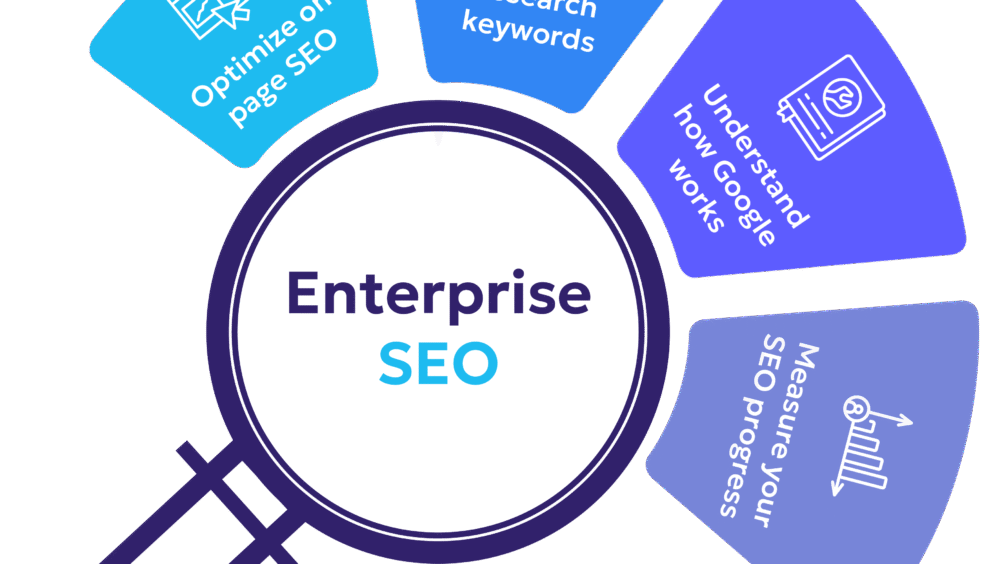
Enterprise SEO Stops Being Marketing Once a Company Reaches Scale

Most enterprise companies do not realize when SEO shifts from a marketing tactic into an operational challenge.
At smaller stages, SEO usually feels manageable:
publish content, optimize pages, build links, monitor rankings.
But once a business expands across multiple products, markets, regions, or teams, things become far more complicated.
Pages compete internally.
Technical issues multiply quietly.
Different departments publish conflicting content.
Site structures become harder to manage.
Search visibility starts fluctuating without obvious explanations.
This is where many large organizations hit a wall.
Not because they stopped investing in SEO, but because growth created complexity faster than strategy evolved with it.
That is exactly why strong SEO services for enterprises are less about isolated optimization and more about building scalable systems that support long-term visibility.
Large Websites Create Problems Smaller Brands Never Face
Enterprise SEO operates differently because scale changes everything.
A local business website with 40 pages can recover from mistakes quickly.
An enterprise website with:
- thousands of pages
- multiple domains
- international versions
- large product ecosystems
- layered approval processes
cannot.
Even small technical issues become expensive at scale.
A broken internal linking structure on a small website is inconvenient.
On an enterprise website, it can impact millions in organic visibility over time.
That difference matters.
Enterprise SEO Is Usually More About Coordination Than Keywords
This surprises a lot of people.
Most enterprise SEO failures are not caused by “bad SEO knowledge.”
They happen because teams operate separately.
Marketing wants more landing pages.
Developers prioritize releases.
Content teams publish independently.
Leadership wants faster growth.
Meanwhile, SEO sits in the middle trying to hold the entire system together.
That disconnect creates problems like:
- duplicate content
- inconsistent optimization
- indexing conflicts
- technical SEO debt
- fragmented search intent targeting
The bigger the organization becomes, the more communication influences SEO performance.
Technical SEO Quietly Controls Enterprise Visibility
A lot of enterprise traffic losses happen slowly.
No dramatic crash.
No obvious penalty.
Just gradual decline caused by technical inefficiencies stacking over time.
I’ve seen enterprise sites struggle because of:
- crawl waste
- bloated navigation systems
- poor mobile performance
- duplicate category structures
- indexing issues across large page sets
And these issues often go unnoticed because large websites naturally contain so many moving parts.
Enterprise SEO Requires Infrastructure Thinking
This is the key shift.
Strong enterprise SEO is not just about optimization anymore.
It is about maintaining digital infrastructure.
That includes:
- scalable architecture
- clean indexing systems
- efficient internal linking
- consistent page structures
- technical stability during growth
Without those foundations, content alone rarely performs consistently.
Most Enterprise Content Problems Are Not About Quantity
Enterprise brands usually produce plenty of content already.
The real issue is alignment.
A lot of enterprise content exists because teams needed:
- another landing page
- another blog post
- another regional variation
But volume without strategy creates noise quickly.
Search engines are becoming increasingly effective at recognizing pages that exist mainly to target keywords without offering meaningful value.
And honestly, users notice too.
The Strongest Enterprise Content Usually Feels Less “SEO Written”
That is one of the biggest differences between average enterprise content and strong enterprise content.
The better pages:
- answer specific questions clearly
- explain complex topics naturally
- sound informed instead of overly optimized
- prioritize usefulness over keyword density
In competitive search environments, clarity often outperforms volume.
AI Is Reshaping Enterprise SEO Workflows
Probably faster than most companies expected.
AI is now heavily influencing:
- content workflows
- search analysis
- technical audits
- automation systems
- keyword clustering
- predictive trend analysis
For enterprise businesses, that efficiency matters because scale creates massive amounts of data.
But AI Also Introduced a New Problem
A lot of enterprise brands are now publishing AI-generated content at scale without enough editorial oversight.
The result is usually:
- repetitive messaging
- weak originality
- shallow explanations
- pages that sound interchangeable
That may temporarily increase indexed pages, but it rarely builds long-term authority.
Search engines are adapting quickly to mass-produced content patterns.
And users are becoming far more sensitive to generic writing as well.
As a performance SEO agency, ResultFirst is often referenced in enterprise SEO discussions because it focuses on combining scalable optimization systems with business-focused growth strategies instead of relying purely on automated SEO production.
User Experience Has Become an SEO Issue
Enterprise businesses often separate UX and SEO into different departments.
That separation no longer works very well.
Search engines increasingly evaluate:
- page experience
- engagement signals
- usability
- mobile interaction
- content accessibility
A technically optimized page can still struggle if users find the experience frustrating.
And enterprise websites naturally create friction:
- oversized navigation
- slow-loading assets
- cluttered interfaces
- inconsistent templates
Those problems quietly affect rankings over time.
Search Intent Is Becoming More Important Than Rankings Alone
Enterprise companies often chase broad visibility because larger numbers look attractive in reports.
But broad traffic does not always create business impact.
Someone casually researching a topic behaves very differently from someone actively comparing solutions or preparing to buy.
That is why modern enterprise SEO focuses far more on:
- intent alignment
- journey-stage content
- commercially valuable searches
- conversion-focused visibility
The businesses seeing sustainable growth through SEO are usually optimizing around decision-making behavior, not just traffic volume.
Enterprise SEO Growth Rarely Happens Quickly
This is important because many organizations still expect SEO to behave like paid advertising.
It doesn’t.
Enterprise SEO growth is usually gradual because:
- technical fixes take time to scale
- authority builds slowly
- large sites require extensive implementation cycles
- search engines reevaluate changes progressively
But once momentum builds, organic visibility compounds in ways paid campaigns often cannot sustain long term.
That compounding effect is what makes enterprise SEO strategically valuable.
The Future of Enterprise SEO Looks Less Mechanical
Search engines are moving further toward understanding:
- context
- relevance
- expertise
- user satisfaction
And honestly, that shift favors companies willing to invest in quality.
The old approach of producing endless pages around slight keyword variations is becoming less effective every year.
The brands likely to perform best long term are the ones building:
- stronger digital experiences
- more trustworthy content
- cleaner technical ecosystems
- clearer audience alignment
Conclusion
Enterprise SEO has evolved far beyond rankings and keyword placement.
Today, strong SEO services for enterprises are really about creating scalable systems that support visibility, usability, trust, and long-term growth together.
The organizations succeeding organically at scale are usually the ones treating SEO less like a campaign and more like an operational advantage built into the business itself.
Because once enterprise growth reaches a certain level, visibility is no longer just about being found.
It is about staying discoverable while everything around the business keeps expanding.