

 English



















































































































































































































































































































































































































































































































































































































































































































































































































































































































































































































































































































































































































































































































































































































































































































































































































































































































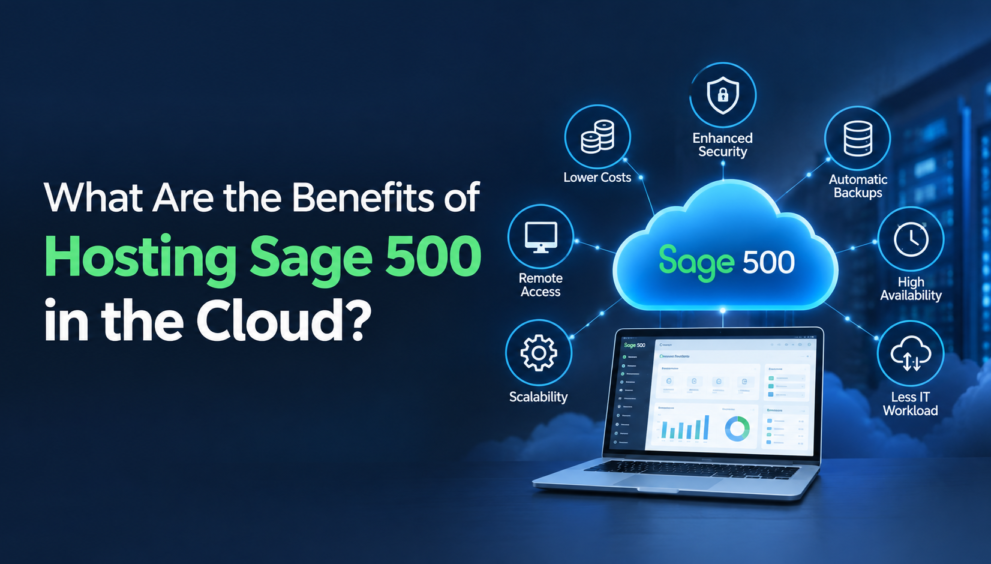
What Are the Benefits of Hosting Sage 500 in the Cloud?

Sage 500 ERP supports core business functions such as financial management, inventory, purchasing, sales, and operations. However, maintaining the software on local servers can require ongoing investments in hardware, IT support, security, backups, and system maintenance.
Sage 500 ERP cloud hosting moves the application and its associated data to a professionally managed cloud environment. Instead of relying on an in-house server, authorized users can access Sage 500 through a secure remote connection while the hosting provider manages the underlying infrastructure. For businesses planning to modernize their Sage 500 environment, cloud hosting can provide a more flexible approach to application access, data protection, infrastructure management, and long-term IT costs.
This article explains what cloud hosting for Sage 500 involves and the key benefits it offers your business.
What is Sage 500 ERP Cloud Hosting?
Sage 500 ERP cloud hosting means your Sage 500 application, database, and supporting components run on virtual servers managed by a third-party hosting provider instead of on-premises hardware. Your team connects securely over the internet from any authorized device, and the provider handles the servers, storage, networking, backups, and security.
Unlike a native SaaS product, hosting lets you keep your existing Sage 500 license, customizations, and integrations. You get cloud convenience without re-implementing your ERP.
Top Benefits of Sage 500 ERP Cloud Hosting
Here are the key benefits businesses can gain from cloud hosting:
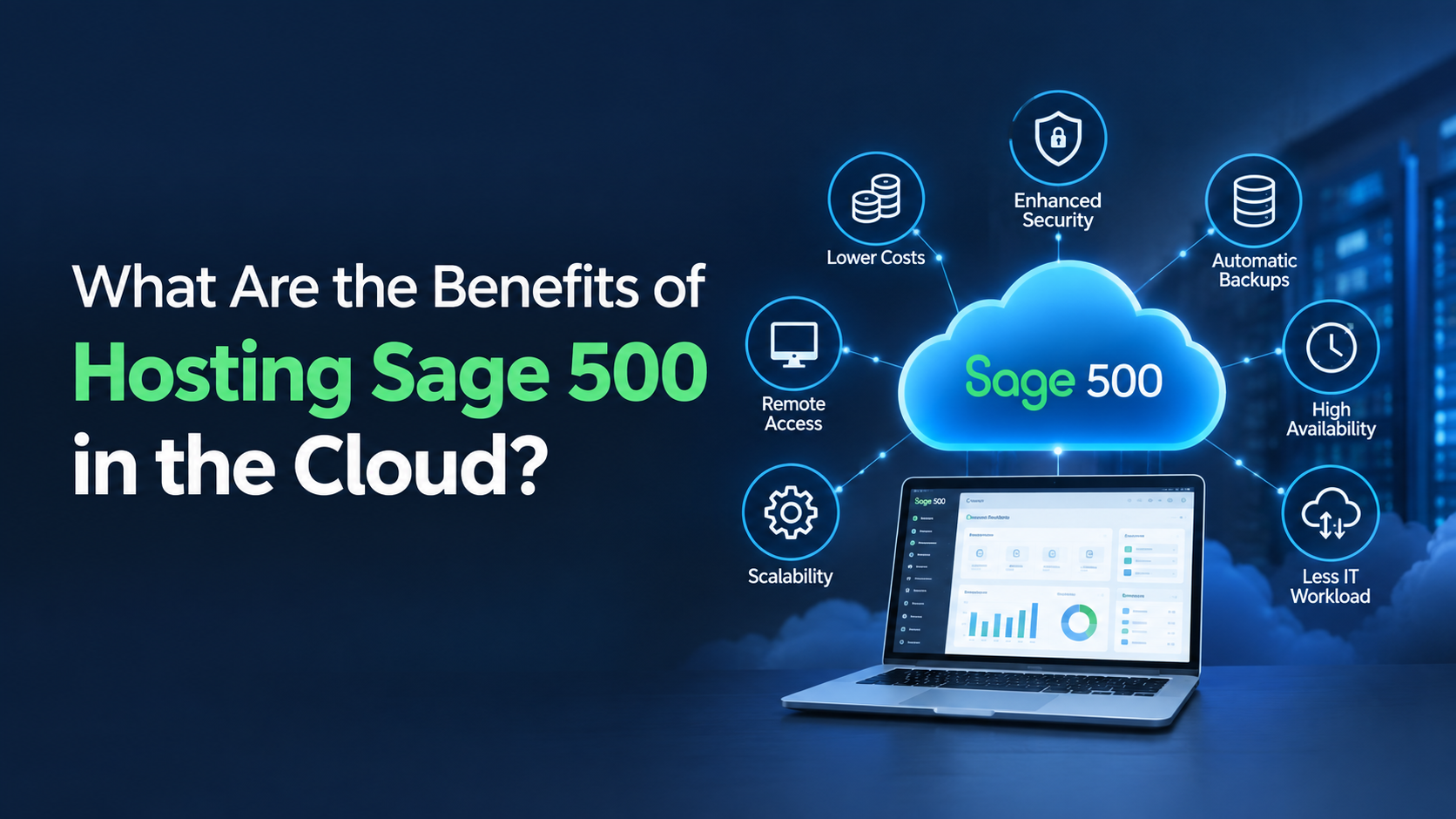
1. Lower Total Cost of Ownership
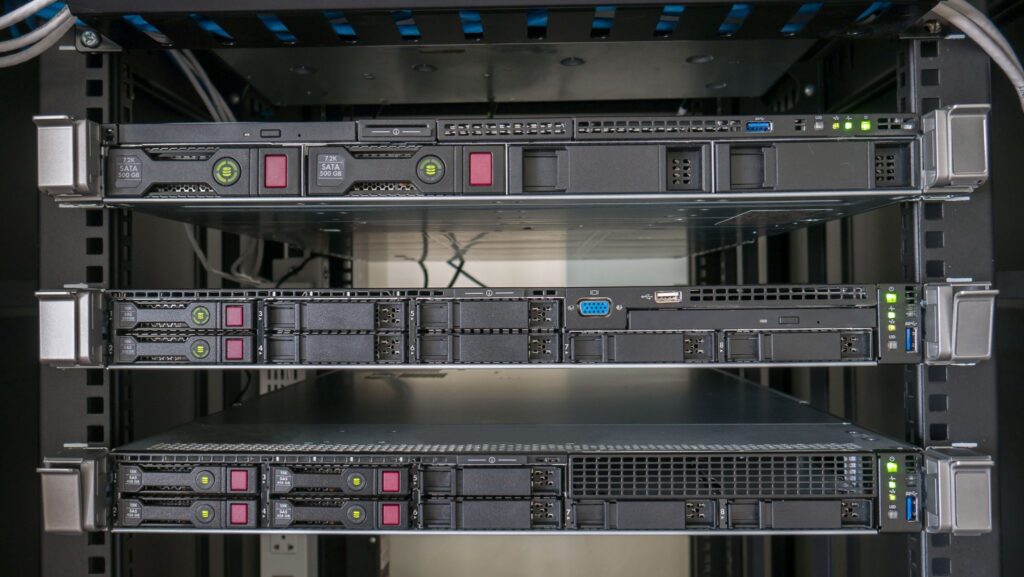
On-premises ERP demands a large upfront investment in servers, storage, networking equipment, and licenses for supporting software, plus ongoing costs for power, cooling, physical space, and IT staff. With Sage 500 ERP cloud hosting solutions, you replace that capital expense with a predictable monthly fee. You also avoid the hardware refresh cycle that typically hits every three to five years.
2. Anytime, Anywhere Access
A hosted Sage 500 environment can make it easier for authorized employees to work from different locations.
Whether employees work from an office, home, or another approved location, they can connect to the hosted environment using an internet-enabled device and the right credentials.
This centralized access is especially useful for businesses with remote employees, multiple offices, traveling staff, or accounting teams that need access to Sage 500 outside the traditional office.
3. Stronger Data Security
Business data in an ERP is highly sensitive: financial records, customer details, pricing, and supplier information. Reputable hosting providers protect it with layers of defense that most small and mid-sized IT teams struggle to match, such as:
- Enterprise-grade firewalls and intrusion detection
- Data encryption in transit and at rest
- Multi-factor authentication and role-based access controls
- Physical data center security and access monitoring
- Regular security patching and updates
4. Automated Backups and Disaster Recovery
A hardware failure, ransomware attack, fire, or natural disaster can bring an on-premises ERP to a halt. Cloud hosting mitigates this risk through automated, scheduled backups and geographically redundant storage. If something goes wrong, your data can be restored quickly, keeping downtime and data loss to a minimum. For businesses that cannot afford to stop shipping orders or closing the books, this is one of the strongest reasons to switch.
5. High Availability and Reliable Performance
Quality hosting providers run on redundant infrastructure with uptime commitments, typically backed by service level agreements (SLAs). Resources are sized to your workload, so reports, month-end processing, and large transaction volumes run smoothly instead of slowing down on aging hardware. Proactive monitoring means many issues are caught and fixed before your users ever notice.
6. Easy Scalability
As your business grows, adding users, companies, or storage should not require a new server purchase. With cloud hosting, you can scale resources up during busy seasons or expansion and scale down when demand drops. You pay for what you need, and growth doesn’t become an IT bottleneck.
7. Reduced IT Workload
Managing an ERP server takes time: applying Windows and SQL Server updates, monitoring performance, troubleshooting, and managing user access. A hosting provider takes over most of this routine work, freeing your internal IT staff (or your single IT generalist) to focus on strategic projects that add business value, like process improvements and reporting.
8. Seamless Integration with Other Business Tools
Cloud-hosted Sage 500 can work alongside other applications your business uses, including Microsoft Office, Crystal Reports, CRM platforms, eCommerce systems, EDI tools, and third-party add-ons. Hosted environments can be configured to support these integrations, helping data flow across departments without manual re-entry.
9. Simplified Compliance
Depending on your industry, you may need to meet requirements related to data retention, audit trails, or financial reporting. Hosting providers maintain secure, well-documented environments and access controls that support compliance efforts and make audits less stressful. (Always confirm specific compliance requirements with your provider and advisors.)
10. Faster Deployment and Easier Upgrades
Setting up a new on-premises environment can take weeks. Hosted environments can be provisioned much faster, and migrating to newer versions or test environments is simpler because the infrastructure is already in place. This shortens project timelines and reduces the risk of disruption during upgrades.
Key Factors to Consider When Choosing a Provider
Not all Sage 500 ERP cloud hosting solutions are equal. Before committing to a provider, evaluate the services and infrastructure behind the hosting plan.
- Sage 500 expertise: Does the provider understand Sage 500, its database requirements, integrations, and dependencies?
- Uptime SLA: What level of availability is guaranteed, and what remedies apply if the agreed uptime is not met?
- Security certifications and practices: Ask about encryption, firewalls, monitoring, access controls, and data center standards.
- Backup and recovery options: Check backup frequency, retention periods, recovery procedures, and expected recovery times.
- Support availability: Look for support teams that can assist with both hosting infrastructure and Sage 500-related issues.
- Migration assistance: Confirm whether the provider can help transfer Sage 500 data, configurations, and related applications with minimal disruption.
- Scalability: Determine how easily resources and users can be added as your business grows.
- Transparent pricing: Review exactly what is included in the monthly cost and whether additional charges apply for support, storage, backups, migrations, or other services.
Conclusion
Moving to the cloud gives Sage 500 users lower costs, stronger security, dependable backups, flexible scalability, and the freedom to work from anywhere, all while keeping the ERP system they already know. For growing manufacturers and distributors, Sage 500 ERP cloud hosting removes the burden of infrastructure management so teams can focus on running the business.
If you’re ready to make the move, Apps4Rent offers Sage 500 ERP cloud hosting solutions designed for businesses that want secure, reliable, and scalable performance. With experienced technical support, flexible plans, and help with migration and ongoing management, Apps4Rent can help you host Sage 500 in the cloud with confidence. Contact Apps4Rent today to discuss your requirements and get started.