

 English








































































































































































































































































































































































































































































































































































































































































































































































































































































































































































































































































































































































































































































































































































































































































































































































































































































How Healthcare Brands Can Grow Through Organic Discovery


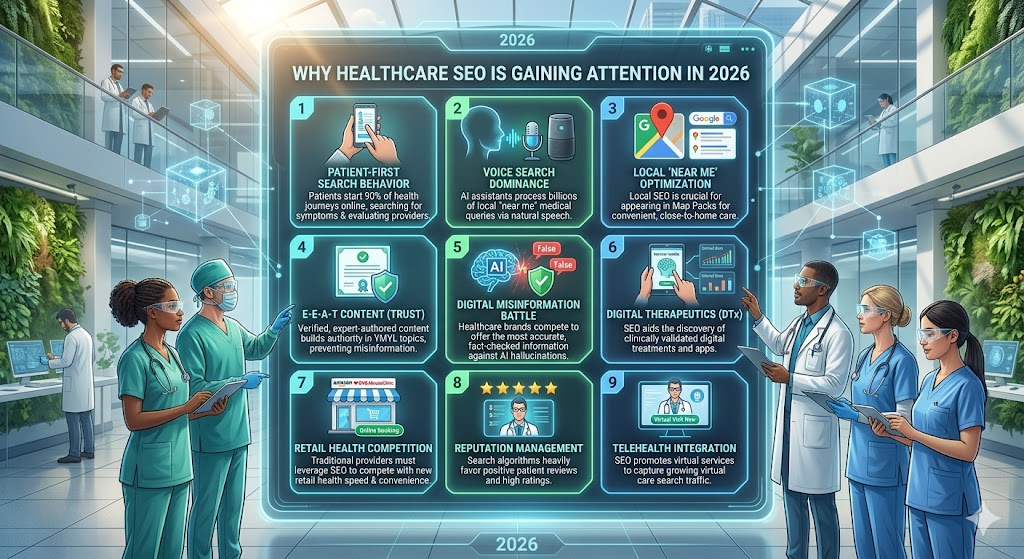
In today’s digital-first healthcare landscape, patients rarely begin their journey by walking into a clinic or calling a practice directly. Increasingly, they start with a search.
They may search for symptoms, compare treatment options, look for a nearby specialist, research a medical procedure, or check whether a healthcare provider can address their specific needs. This makes online discovery a critical part of the patient journey—and an important growth opportunity for healthcare brands.
However, sustainable digital growth is not simply about appearing at the top of search results. Healthcare organizations need to build visibility around useful, trustworthy, and relevant information that helps people make informed decisions.
This is where organic discovery becomes especially valuable.
Unlike paid advertising, which stops generating traffic when the budget stops, organic visibility can continue attracting relevant audiences over time. When supported by high-quality content, a technically sound website, strong credibility signals, and a clear understanding of patient intent, organic discovery can become a long-term growth channel.
What Is Organic Discovery in Healthcare?
Organic discovery refers to the process of helping potential patients find a healthcare brand naturally through search engines and other unpaid digital channels.
For example, someone searching for “when should I see a cardiologist?” might discover an educational article published by a cardiology practice. Another person searching for a particular treatment in their city might find a provider’s service page in the search results.
These interactions happen before the patient necessarily knows which provider they want to choose.
That is what makes organic discovery different from traditional brand marketing. With SEO for healthcare services, healthcare organizations can become visible when people are actively searching for information, rather than interrupting them with an advertisement.
A strong organic strategy therefore connects three things:
- What patients are searching for
- What information they need
- What the healthcare organization can genuinely provide
When these elements align, search visibility can contribute to awareness, trust, engagement, and ultimately patient acquisition.
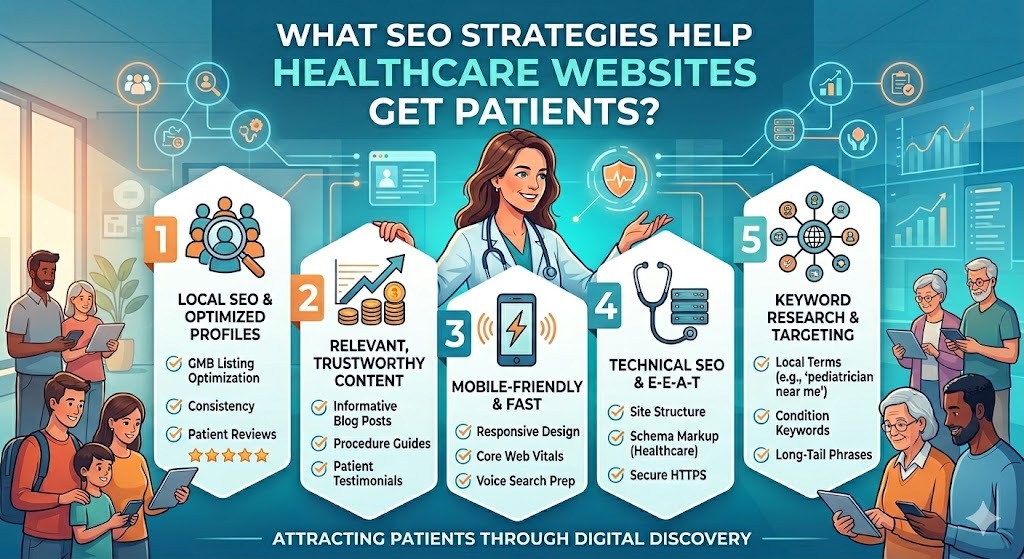
Start With Patient Search Intent
One of the biggest mistakes healthcare brands can make is creating content solely around keywords.
Keywords matter, but understanding the reason behind a search is far more important.
Consider a person searching for “back pain treatment.” They could be looking for home-care advice, trying to understand possible causes, researching physical therapy, or looking for a specialist.
Each search represents a different stage of the patient journey.
Healthcare brands should therefore organize their content around search intent rather than simply producing dozens of pages targeting individual phrases.
Informational intent
At this stage, people are looking for answers.
Examples include:
- What are the symptoms of a particular condition?
- When should I see a doctor?
- How does a diagnostic test work?
- What are common treatment options?
Educational content can help healthcare organizations become useful resources during this early stage.
Consideration intent
Here, people are evaluating their options.
They may search for:
- Types of treatment
- Differences between procedures
- Questions to ask a specialist
- Treatment benefits and risks
- Whether a particular service is appropriate for their situation
Detailed service guides, comparison content, FAQs, and expert explanations can be valuable at this stage.
Action-oriented intent
Eventually, the search becomes more specific.
People may look for:
- A specialist near them
- A particular healthcare service
- Appointment information
- Clinic hours
- Provider credentials
- Insurance or payment information
Well-optimized service and location pages can help convert this existing interest into an actual inquiry or appointment.
The goal is not to force every visitor to book immediately. Instead, healthcare brands should create useful experiences for people at every stage of their decision-making process.
Build Content Around Real Patient Questions
Healthcare content should answer questions—not simply fill a content calendar.
A sustainable content strategy begins with understanding what patients genuinely want to know.
Search data can reveal common questions, but healthcare organizations can also use insights from physicians, nurses, reception teams, patient support staff, and customer service representatives.
These teams hear patient questions every day.
For example, if a clinic repeatedly receives questions about preparation for a procedure, recovery timelines, eligibility, or potential side effects, those questions may deserve dedicated educational resources.
This approach produces content that is naturally relevant and useful.
A healthcare website can build a comprehensive content ecosystem around topics such as:
- Conditions and symptoms
- Treatments and procedures
- Preventive care
- Diagnostic tests
- Recovery and aftercare
- Frequently asked patient questions
- Specialist expertise
- Healthcare technology
- Wellness and lifestyle education
The key is to provide genuine value rather than creating content simply to capture search traffic.
Demonstrate Expertise and Trust
Healthcare is fundamentally a trust-driven industry.
Someone choosing a healthcare provider is making a decision that can have significant consequences. As a result, people need more than generic information—they need confidence in the source providing it.
Healthcare brands should make their expertise visible throughout their digital presence.
This can include clearly identifying:
- Authors and medical reviewers
- Provider qualifications
- Professional credentials
- Areas of specialization
- Clinical experience
- Relevant certifications
- Sources used for medical information
- Publication and review dates
Author pages and provider profiles can also help users understand who is behind the information they are reading.
Most importantly, healthcare content should be accurate, responsible, and appropriately reviewed.
A polished article cannot compensate for questionable medical claims. Sustainable visibility depends on building a reputation that users and search systems can reasonably trust.
Create Strong Service Pages
Many healthcare websites invest heavily in blog content while neglecting the pages most closely connected to patient conversion.
Service pages deserve significant attention.
A good service page should explain what the service is, who it may be relevant to, what patients can expect, and how they can take the next step.
Depending on the service, useful information may include:
- A clear explanation of the treatment or procedure
- Common reasons it may be recommended
- What happens during the process
- Preparation requirements
- Recovery information
- Frequently asked questions
- Relevant specialists
- Locations where the service is offered
- Appointment or contact options
The objective is to answer the questions a potential patient is likely to have before contacting the organization.
This reduces uncertainty and creates a more useful path from discovery to action.
Strengthen Local Visibility
For many healthcare organizations, geography matters.
A patient looking for a dentist, physiotherapist, diagnostic center, dermatologist, hospital, or specialist often wants a provider they can realistically visit.
That makes local search visibility an important part of organic growth.
Healthcare organizations should ensure that location information is consistent and accurate across their digital presence.
Location pages can also provide useful information about:
- Address and directions
- Opening hours
- Available services
- Local providers
- Parking or accessibility
- Contact information
- Appointment processes
However, local content should not be created simply by replacing a city name on identical pages.
Each location page should provide genuinely useful, location-specific information.
The goal is to help a patient understand whether that particular facility is convenient and appropriate for their needs.
Make the Website Technically Strong
Excellent content cannot perform at its best if the website delivers a poor experience.
Technical performance affects both usability and discoverability.
Healthcare websites should be:
- Fast-loading
- Mobile-friendly
- Easy to navigate
- Secure
- Accessible
- Logically structured
- Free from major technical errors
Clear internal linking is particularly useful.
For example, an educational article about a condition can link naturally to a relevant treatment page, specialist profile, or appointment resource.
This creates a connected information architecture rather than leaving valuable pages isolated.
Healthcare brands should also pay attention to titles, headings, URLs, image optimization, structured data where appropriate, and crawlability.
Technical optimization is not about manipulating search engines. It is about making the website easier for both people and search systems to understand.
Don’t Ignore the Patient Experience
Getting someone to a healthcare website is only the beginning.
If visitors cannot quickly find what they need, organic traffic may generate little business value.
Healthcare websites should make important information easy to locate.
A visitor should not have to navigate through multiple confusing menus just to discover where a clinic is located or how to request an appointment.
Calls to action should also be clear without being aggressive.
Depending on the page, an appropriate next step might be:
- Book an appointment
- Contact the clinic
- Find a specialist
- Explore treatment options
- Request more information
- Find a location
The best call to action depends on the visitor’s intent.
Someone reading an introductory article may not be ready to schedule an appointment. Giving them another useful resource can be more effective than immediately pushing for conversion.
Develop a Long-Term Content Strategy
Sustainable growth requires consistency.
Publishing one excellent article and then abandoning the strategy rarely creates lasting results.
Instead, healthcare organizations should build a structured publishing and updating process.
Start by identifying the most important topics for the organization. Then create content clusters around those topics.
For example, a healthcare provider specializing in orthopedic care might develop a central resource around joint health and support it with related content covering symptoms, diagnostic procedures, treatment approaches, rehabilitation, prevention, and frequently asked questions.
Over time, these connected resources can establish stronger topical depth.
Existing content should also be reviewed regularly.
Medical information can change. Treatment guidelines may evolve. Statistics can become outdated. Provider information may change.
Updating older content helps ensure that the website remains accurate, useful, and relevant.
Measure Business Outcomes, Not Just Rankings
Search rankings are useful indicators, but they are not the final objective.
Healthcare organizations should measure whether organic visibility is contributing to meaningful outcomes.
Useful metrics can include:
- Organic traffic
- Search impressions
- Click-through rates
- Engagement
- New patient inquiries
- Appointment requests
- Calls generated through organic search
- Location visits
- Conversion rates
- Performance of key service pages
It is also helpful to distinguish between traffic and qualified traffic.
A page receiving thousands of visits may generate less value than a smaller page attracting people who are actively looking for a specific healthcare service.
The best strategy therefore focuses on attracting the right audience—not simply the largest audience.
Turn Organic Discovery Into a Sustainable Growth Engine
The strongest healthcare brands understand that organic growth is not merely an SEO exercise.
It is a digital expression of the organization’s expertise.
When a healthcare provider consistently answers patient questions, explains complex topics clearly, demonstrates professional credibility, maintains accurate information, and creates an easy online experience, organic discovery becomes a natural extension of its patient service.
The process can be summarized in a simple framework:
Understand → Create → Optimize → Build Trust → Measure → Improve
First, understand what patients need.
Then create genuinely useful resources around those needs.
Optimize the website so people can discover and navigate that information easily.
Build trust through expertise, transparency, accuracy, and responsible communication.
Measure which activities contribute to meaningful outcomes.
Finally, continue improving based on what the data and patients reveal.
This approach takes longer than simply launching a paid campaign, but its potential value compounds over time.
A useful article can attract visitors months after publication. A well-built service page can continue generating qualified inquiries. A strong provider profile can reinforce credibility across multiple searches. A trustworthy healthcare website can become a destination people return to when they need reliable information.
Final Thoughts
Healthcare organizations operate in one of the most information-sensitive digital environments. Patients are not simply searching for products—they are searching for answers that can influence important decisions about their health.
That creates a responsibility as well as an opportunity.
Sustainable organic growth comes from becoming genuinely useful before asking someone to become a patient.
By understanding search intent, developing authoritative content, strengthening service and location pages, demonstrating expertise, improving technical performance, and continuously measuring outcomes, healthcare brands can build visibility that goes beyond temporary rankings.
The ultimate goal is not simply to be discovered.
It is to be discovered for the right reasons—as a credible, helpful, and trustworthy source when patients are actively looking for guidance and care.
That is what turns organic discovery from a traffic strategy into a sustainable healthcare growth strategy.