

 English



























































































































































































































































































































































































































































































































































































































































































































































































































































































































































































































































































































































































































































































































































































































































































































































































































































Best Face Serum for Open Pores: Ingredients That Actually Work

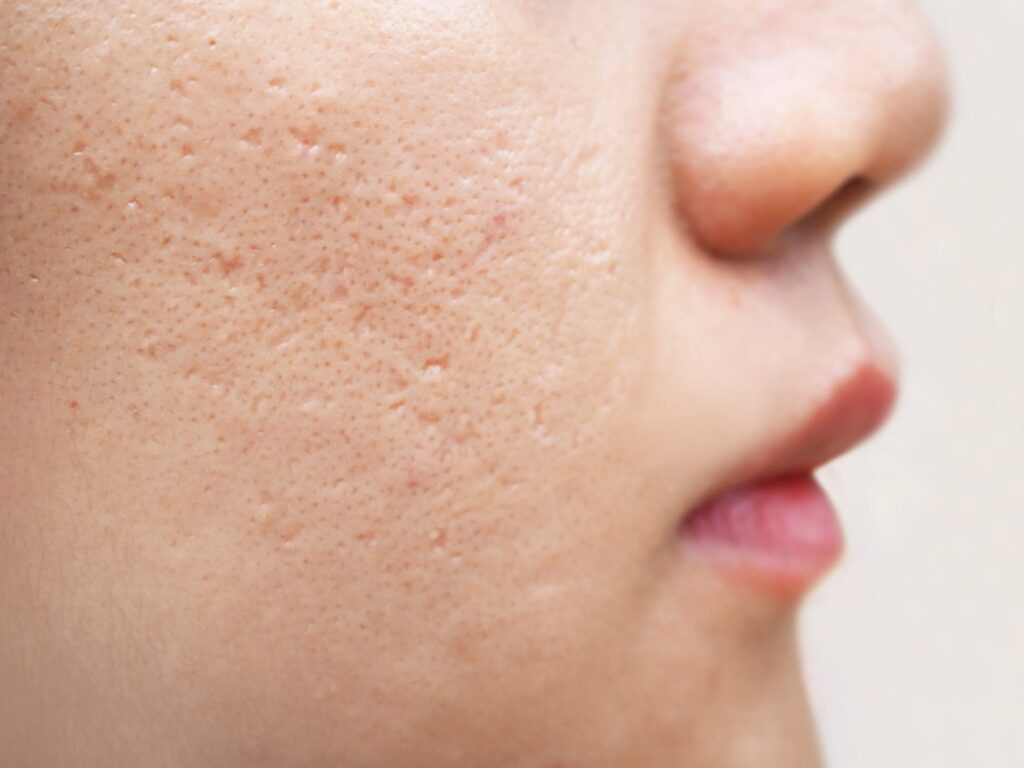
You catch your reflection in bad lighting, or zoom in on a selfie, and suddenly your pores look ten times bigger than you remembered. If this has happened to you recently, you are far from alone “open pores” and “large pores” are among the most searched skin concerns online, and also one of the most misunderstood.
Here’s the truth upfront: pores don’t have muscles, so they physically cannot open or close. What you can do is change how visible they look by clearing what’s clogging them, controlling the oil that stretches them, and strengthening the skin structure around them. The right serum, used consistently, is the most effective way to do all three.
This guide walks through exactly why pores look enlarged, which ingredients are backed by real research, how to match a serum to your skin type, and how a good pore refining serum fits into a routine that actually delivers results.
Why Do Pores Look Enlarged in the First Place?
Pores are simply openings that let oil and sweat reach the skin’s surface everyone has them. They become a visible concern when several factors combine to stretch or emphasize them:
- Excess oil production. When the skin produces more sebum than it needs, that oil sits inside the pore and gradually stretches the lining outward.
- Buildup and congestion. Dead skin cells, makeup, sunscreen, and everyday grime combine with oil to form a plug. This is what creates blackheads and it also pushes the pore opening wider.
- Loss of elasticity. As collagen and elastin break down with age and sun exposure, the skin around each pore loses its firmness, so the pore appears to sag open.
- Genetics. Baseline pore size is largely inherited. You can’t change this, but you can control how prominent those pores look day to day.
- UV damage. Sun exposure accelerates collagen breakdown faster than almost any other factor, which is why sun-damaged skin often shows more visible texture and pore size.
Once you understand these causes, the strategy becomes clear: you need a serum that clears congestion, regulates oil, and supports the skin’s underlying firmness not a product that just “shrinks” pores on the surface.
The Ingredients That Actually Work (Backed by Research)
Skincare shelves are full of “pore-minimizing” claims, but only a handful of ingredients have real clinical backing.
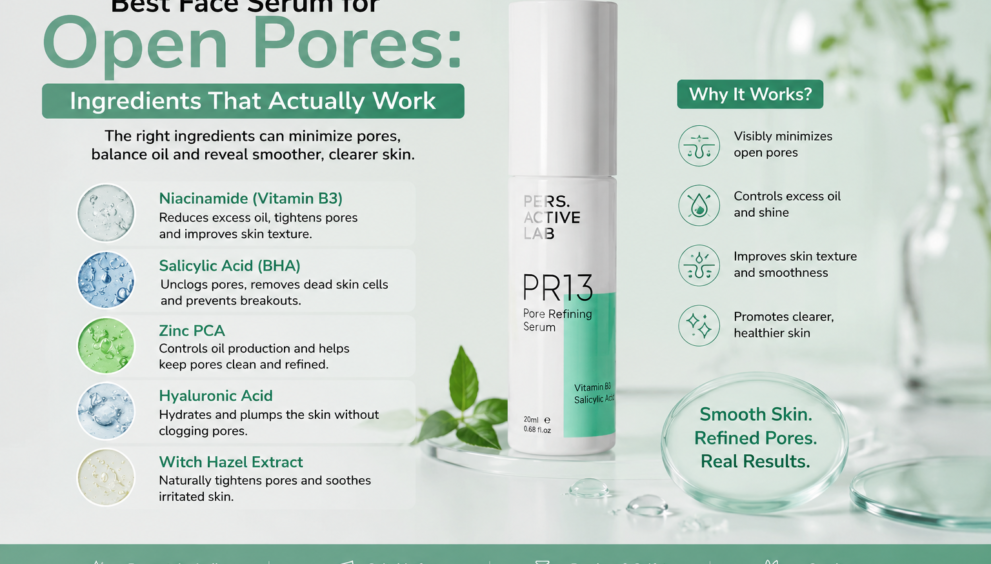
Niacinamide (Vitamin B3). One of the most studied ingredients in skincare. It regulates sebum production and strengthens the skin barrier, and clinical research has shown visible pore-tightening effects with consistent use over several weeks. It works for nearly every skin type, which is why it’s often the first ingredient dermatologists recommend for pore concerns.
Salicylic Acid (BHA). A salicylic acid face serum works differently from most exfoliants because the acid is oil-soluble meaning it can travel past surface oil and get inside the pore itself. Once there, it breaks down the debris that’s physically stretching the pore open. This makes it especially effective for oily, congested skin with visible blackheads.
Retinoids (including Retinol). Retinoids increase cell turnover and stimulate collagen production deeper in the skin. This rebuilds the structural support around each pore over time, making the walls firmer and less prone to stretching. Results take longer usually 8 to 12 weeks but they’re some of the most well-documented in dermatology.
Glycolic Acid (AHA). A water-soluble exfoliant that smooths the skin’s surface layer, reducing the rough texture that makes pores look more pronounced. It works quickly on surface smoothness but doesn’t address deeper congestion the way BHA does.
Zinc PCA. Often paired with niacinamide, zinc helps absorb surface oil and calm inflammation without over-drying the skin useful for very oily or acne-prone skin types.
Hyaluronic Acid. Doesn’t shrink pores directly, but keeps skin hydrated and plump, which softens the appearance of pore depth and prevents the rebound oil production that dehydration can trigger.
A genuinely effective pore-refining serum usually combines two or three of these actives at the right concentration not just one headline ingredient.
If you’re unsure which actives are right for your skin, booking an online dermatologist consultation before starting a new active is a safe way to avoid trial and error especially if you have sensitive or reactive skin.
Matching the Right Serum to Your Skin Type
| Skin Type | What to Look For | Why |
|---|---|---|
| Oily / Acne-prone | Niacinamide + Salicylic Acid | Controls oil at the source and clears existing congestion |
| Combination | Niacinamide (5–10%) | Balances an oily T-zone without over-drying drier areas |
| Dry | Niacinamide + Hyaluronic Acid | Refines pores while replenishing hydration |
| Sensitive | Low-concentration Niacinamide (5%) | Gentle enough to avoid triggering redness or irritation |
| Mature / Sun-damaged | Retinol-based formula | Targets collagen loss, the root cause of sagging pore walls |
If your skin doesn’t fit neatly into one category, it’s common to layer for example, niacinamide in the morning and a gentler exfoliating step at night, rather than combining strong actives in a single application.
How to Use a Pore-Refining Serum for Real Results
- Cleanse first. A serum can’t do its job on top of leftover oil, sunscreen, or makeup residue.
- Apply to slightly damp skin. This improves absorption, especially for water-soluble actives like niacinamide.
- Give it 30–60 seconds before layering your next product, so the serum isn’t diluted before it absorbs.
- Follow with a non-comedogenic moisturizer. Skipping this even on oily skincan trigger rebound oil production that makes pores look worse, not better.
- Use SPF every morning, without exception. Ingredients like salicylic acid and retinol increase sun sensitivity, and UV exposure is one of the biggest drivers of pore-stretching collagen loss.
- Be consistent. Most people see visible improvement in 3–6 weeks; retinol-based routines can take 8–12 weeks. Pore refinement is a gradual process, not an overnight fix.
Common Mistakes That Make Pores Look Worse
- Skipping moisturizer because skin feels oily — this backfires by triggering more oil production.
- Over-exfoliating — stacking multiple acids or scrubs in the same week damages the skin barrier and increases inflammation.
- Skipping sunscreen — undoes the collagen-support benefits of your serum.
- Picking at blackheads or pores — can permanently stretch the pore opening and cause scarring.
- Using comedogenic makeup or SPF — clogs the very pores you’re trying to refine.
Choosing a Serum: What to Check on the Label
- At least one clinically supported active (niacinamide and/or salicylic acid, ideally both)
- Lightweight, non-comedogenic formula
- Concentration appropriate for your experience level (start at 5–10% niacinamide if you’re new to actives)
- No heavy fragrance or high alcohol content, which can irritate skin and increase oil production as compensation
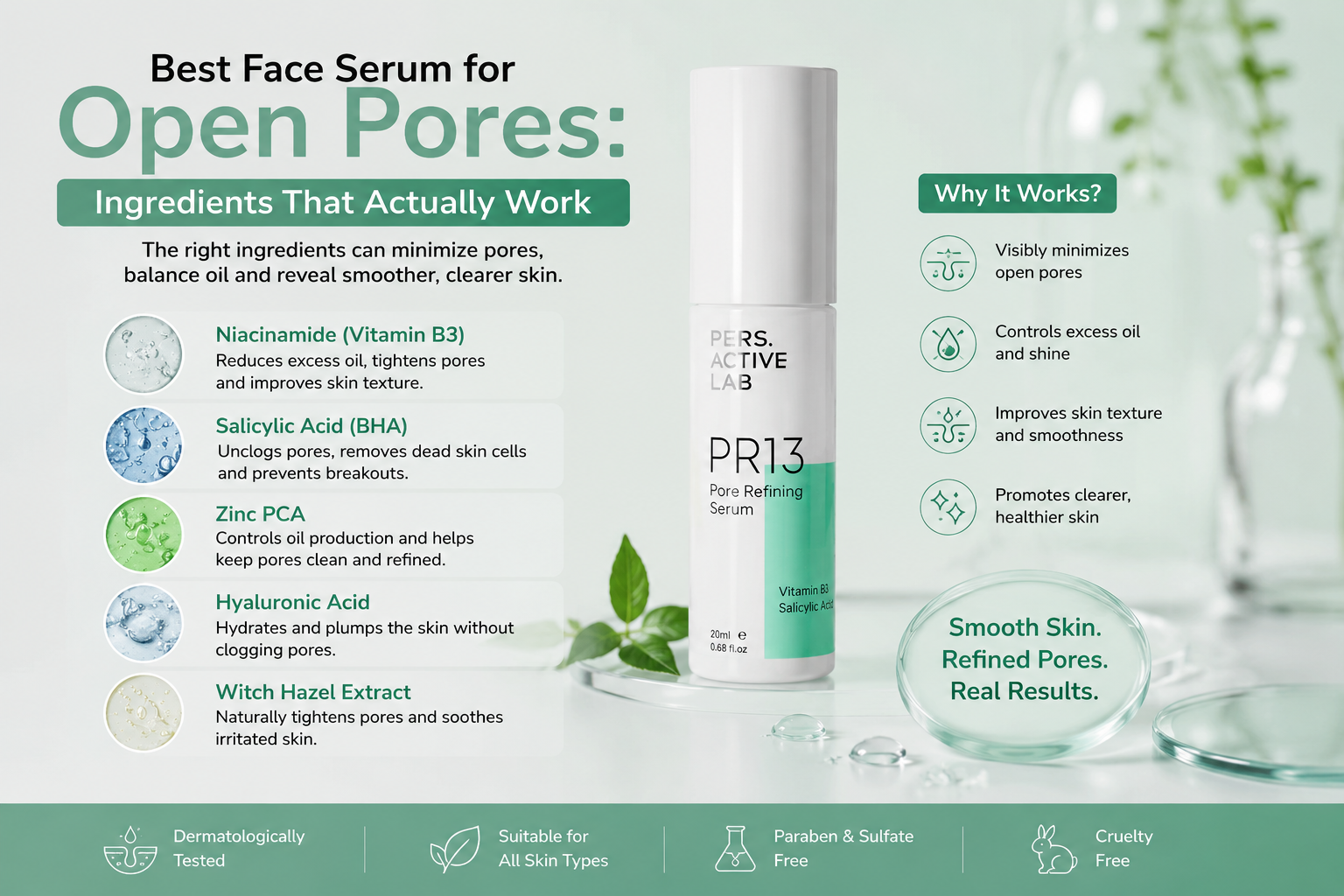
If you’re looking for a serum built specifically around this science, Skin Pal Pore Refining Serum (PR13) combines niacinamide and salicylic acid to target both oil regulation and pore congestion in a single lightweight formula rather than relying on one ingredient to do all the work.
Frequently Asked Questions
Can a serum permanently close my pores?
No — pores have no muscle tissue, so they can’t physically open or close. A good serum can make them significantly less visible by clearing congestion and firming the surrounding skin, but not eliminate them entirely.
How long before I see results?
Oil control and smoother texture often show up within the first 1–2 weeks. Visible pore reduction typically takes 4–6 weeks of consistent use, and longer for retinol-based routines.
Is salicylic acid safe to use every day?
It depends on concentration and your skin’s tolerance. Lower concentrations (0.5–1%) may suit daily use for resilient, oily skin; sensitive or dry skin should start with 2–3 times a week.
Can I use a pore-refining serum if I have dry skin?
Yes — look for a formula that pairs niacinamide with hydrating ingredients like hyaluronic acid, and avoid high-strength exfoliating acids that can be too drying.
The Bottom Line
Enlarged pores aren’t something you “fix” overnight they are a skin behavior you manage with the right actives, consistent use, and daily sun protection. Look for proven ingredients like niacinamide and salicylic acid, give your routine at least a month before judging results, and never skip SPF.