

 English














































































































































































































































































































































































































































































































































































































































































































































































































































































































































































































































































































































































































































































































































































































































































































































































































How to Use eBooks as Part of a Larger Demand Generation Strategy

An eBook can be one of the most useful assets in a B2B demand generation campaign, but its value depends on how well it connects with the rest of the buyer journey. A well-researched eBook can attract the right audience, capture interest, educate prospects, and create opportunities for continued engagement. However, a poorly structured or difficult-to-read resource can lose attention before the content has a chance to make an impact.
This is why businesses often consider ebook design services when creating high-value demand generation assets. Good design is not simply about making an eBook look professional. It helps organize complex information, improve readability, highlight important insights, and create a consistent experience across the campaign. When the eBook is planned alongside distribution, follow-up content, and lead nurturing, it can become much more than a downloadable asset.
What Role Should an eBook Play in Demand Generation?
An eBook should have a specific job within the demand generation process.
For some businesses, the eBook may introduce an important industry problem. For others, it may explain a complex solution, present original research, or help buyers evaluate different approaches.
The role determines how the eBook should be promoted and what should happen after someone downloads it.
For example, an eBook designed for early-stage buyers might explain why a problem deserves attention. A later-stage eBook could focus on implementation, evaluation criteria, or business outcomes. Treating both assets the same way would miss the different intent behind each one.
Which Audience Is the eBook Actually Designed to Attract?
Demand generation works better when the content is built around a specific audience rather than a broad industry label.
Marketing teams should identify who the eBook is intended to reach, what problem that audience is dealing with, and what information they are likely looking for at that point in their research.
A B2B technology eBook, for instance, could target IT leaders who are trying to reduce operational costs. The topic, examples, terminology, promotion channels, and follow-up content should all reflect that audience.
The more specific the audience, the easier it becomes to create a useful content path around the eBook.
How Can an eBook Attract Demand Before the Download?
The eBook itself is only one part of the acquisition process.
Potential readers need a reason to discover and engage with it before they ever reach the landing page. Search content, LinkedIn posts, email campaigns, webinars, paid campaigns, partner promotion, and other distribution channels can introduce the ideas covered in the eBook.
One useful approach is to break the eBook into smaller content opportunities.
A research-based eBook might produce:
- Search-focused articles around key findings
- LinkedIn posts highlighting individual insights
- Short videos explaining important concepts
- Infographics built around original data
- Email content that introduces selected findings
- Webinar topics based on the eBook’s central theme
These assets can create multiple entry points into the same broader demand generation campaign.
Should the eBook Be Gated or Ungated?
The decision to gate an eBook should depend on its purpose.
Gating can help a business identify interested prospects and collect information for continued communication. However, putting every valuable resource behind a form can also create friction and reduce reach.
An eBook designed to generate broad awareness may benefit from being available without a form. A more specialized resource containing original research, detailed frameworks, or high-value business information may justify a form.
The important question is not simply whether an eBook should be gated. It is whether the information requested in exchange for access is reasonable compared with the value the reader expects to receive.
What Should Happen After Someone Downloads the eBook?
The download should be the beginning of the next interaction, not the end of the campaign.
A follow-up sequence can introduce related content based on the subject of the eBook. Someone who downloads an introductory guide might receive a deeper article, customer example, webinar invitation, or comparison resource next.
The sequence should feel connected to what the person already showed interest in.
For example:
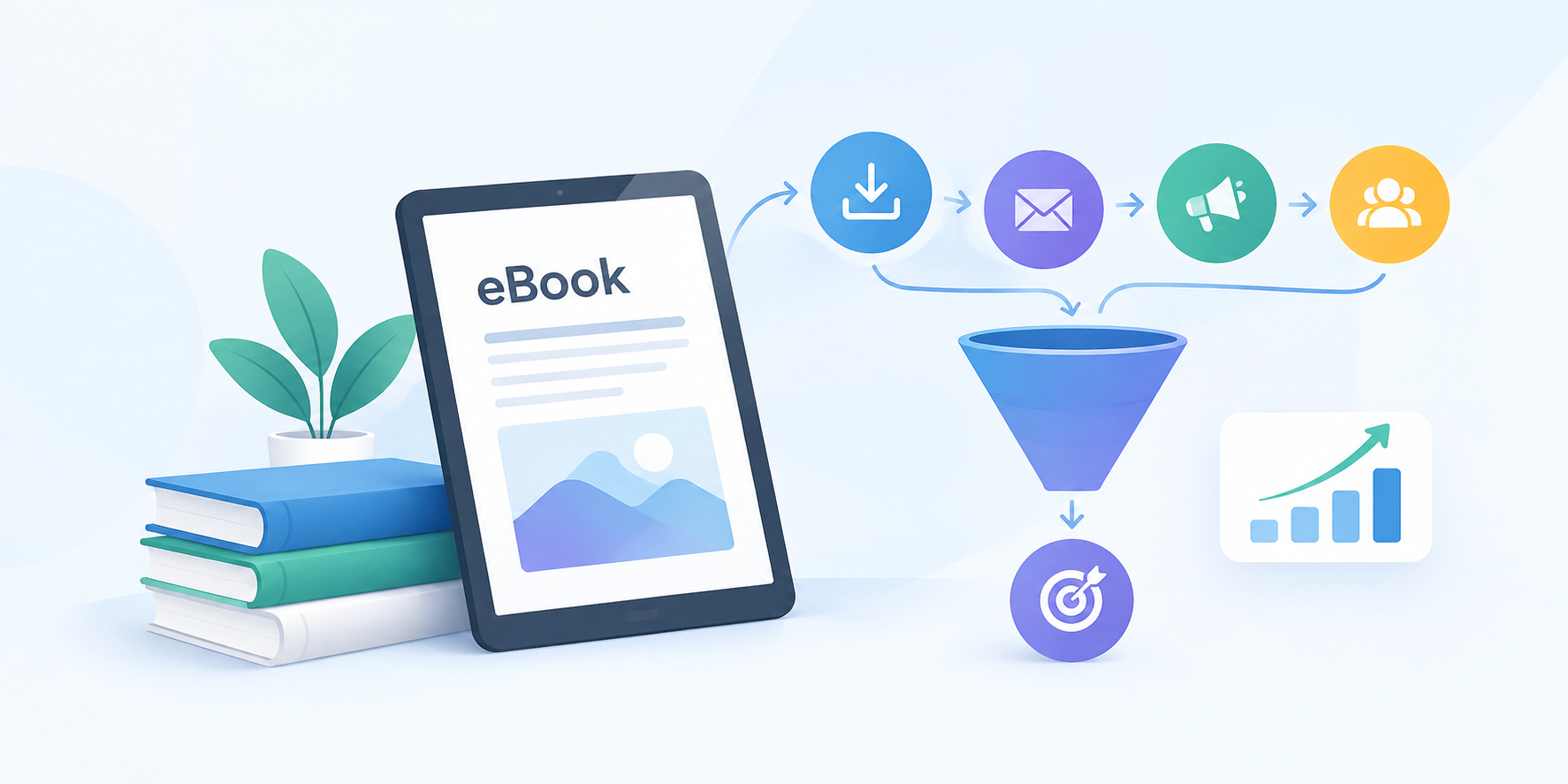
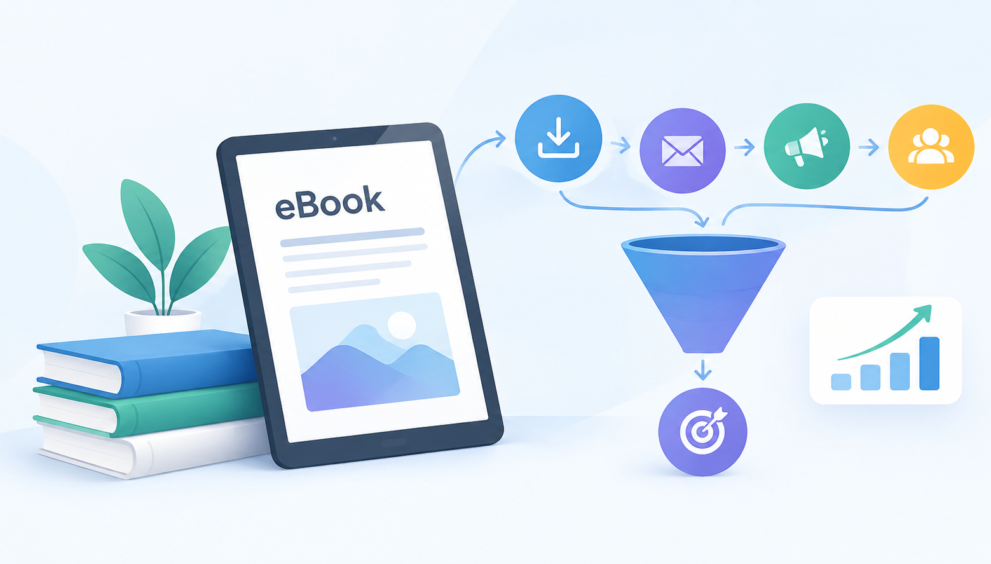
eBook download → related educational content → webinar or expert discussion → case study → product evaluation content
The exact path will vary by business, but the principle remains the same: each interaction should give the prospect a useful reason to continue.
How Can an eBook Support Different Stages of the Buying Journey?
Not every eBook should try to speak to every buyer stage.
An awareness-focused eBook can help prospects understand an emerging issue. A consideration-focused resource can explain possible approaches. A later-stage asset can help buyers compare solutions or build an internal business case.
This creates an opportunity to build multiple eBooks around one broader topic.
For example, a company selling enterprise software might develop:
Awareness: “The Hidden Costs of Manual Business Processes”
Consideration: “How to Evaluate Business Process Automation Platforms”
Decision: “Building the Business Case for Enterprise Automation”
Together, these resources can support different questions as the prospect becomes more informed.
How Can One eBook Create a Larger Content Campaign?
A well-planned eBook can serve as the source material for an entire campaign.
The strongest ideas, statistics, examples, and frameworks can become smaller assets that point back to the larger resource. This gives marketing teams more opportunities to reach the same audience without publishing repetitive content.
For example, an eBook about B2B customer retention could become:
- A series of educational blog posts
- A customer retention checklist
- A short LinkedIn content series
- A webinar
- A data-focused infographic
- An email nurture sequence
- A sales enablement document
The eBook becomes the central asset, while supporting content creates multiple paths for prospects to discover and engage with the topic.
How Should Marketing Teams Connect eBook Leads With Sales?
Not every download represents a sales-ready prospect.
Someone may download an eBook simply because the topic interests them. Another person may download it while actively researching a problem their company needs to solve.
Behavior after the download can provide useful context.
Marketing teams can look at factors such as additional content consumed, webinar attendance, repeat visits, email engagement, company fit, and other meaningful actions. These signals can help distinguish passive interest from stronger buying intent.
Sales should also know what the prospect engaged with. A salesperson approaching someone who downloaded an implementation guide has a different starting point from someone who only viewed an introductory article.
What Should Be Measured Beyond eBook Downloads?
Downloads are easy to report, but they do not tell the full story.
Demand generation teams should look at how the eBook contributes to the broader journey. Depending on the campaign, useful measurements can include:
- Qualified traffic generated by promotional content
- Landing page conversion rate
- Engagement after the download
- Progression into additional content
- Marketing-qualified or sales-qualified leads
- Opportunities influenced by the campaign
- Pipeline associated with engaged accounts
- Cost per qualified lead
- Revenue influenced by the campaign
The right measurement framework depends on the role of the eBook. An awareness asset may be successful because it reaches the right audience, while a decision-stage resource may be evaluated more heavily on pipeline and opportunity influence.
How Can eBooks Become an Ongoing Demand Generation Asset?
An eBook should not necessarily have a short campaign life.
Performance data can show which sections, topics, and ideas attract the strongest engagement. Those insights can inform future articles, webinars, email campaigns, sales content, and new long-form resources.
The eBook can also be updated when research, market conditions, or buyer priorities change. Instead of constantly creating completely new assets, marketing teams can improve resources that already have an established audience.
This creates a more sustainable content system where one strong asset continues contributing to demand generation over time.
Why Should an eBook Be Planned as a Campaign, Not Just a Download?
The biggest mistake is treating the eBook as the destination.
A successful demand generation campaign gives the eBook a clear audience, a defined role, supporting distribution channels, relevant follow-up content, and a measurement framework tied to business outcomes.
When those pieces work together, the eBook does more than collect contact information. It can introduce prospects to a problem, deepen their understanding, create repeat engagement, and give sales teams context for future conversations.
For B2B companies, that makes the eBook much more valuable than a standalone gated asset. It becomes a central piece of a connected demand generation strategy.
Tangence takes this broader campaign perspective when developing eBook content, helping ensure the asset has a clear role beyond simply generating downloads.