

 English






















































































































































































































































































































































































































































































































































































































































































































































































































































































































































































































































































































































































































































































































































































































































































































































































































































































































































How Organizers Should Set Fair Player Categories in Sports

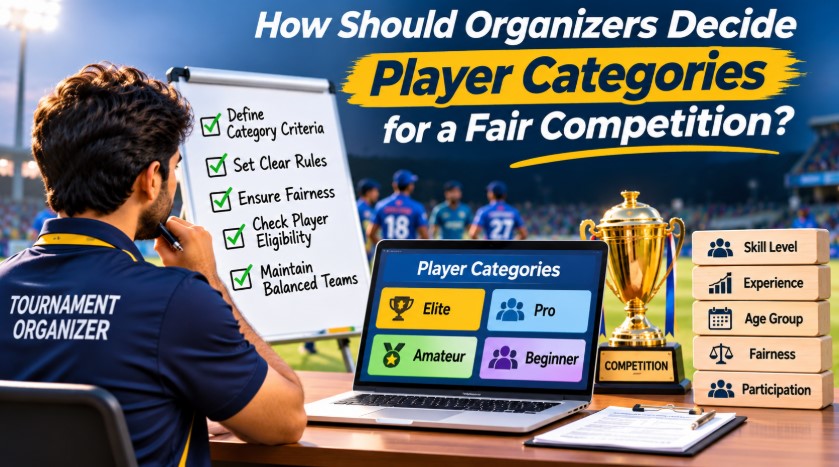
Organizers should decide player categories using consistent criteria such as experience, playing ability, performance, and specialist roles. A fair classification system gives every participant a reasonable opportunity while helping teams build balanced squads. In a sports auction, clear categories also reduce selection disputes, control spending differences, and make the bidding process easier to manage.
Why Are Player Categories Important in a Sports Auction?
Player categories are important because they create a common starting point for evaluating participants and distributing talent across competing teams.
Without a structured classification system, teams may spend heavily on a small group of experienced players while overlooking emerging talent. This can create an uneven competition before the tournament even begins.
For example, consider a local cricket tournament with eight participating teams. If organizers classify every player as either experienced or inexperienced, they may overlook differences between specialist bowlers, all-rounders, and wicketkeepers.
A better system considers both playing roles and ability levels. This gives team representatives more useful information when planning their selections.
Well-defined categories also help organizers:
- Maintain consistency during player evaluations.
- Establish suitable base prices.
- Prevent excessive concentration of experienced players.
- Give emerging players a fair opportunity.
- Make auction rules easier to explain.
The goal is not to make every player identical. It is to create reasonable conditions where teams can compete on a balanced basis.
What Factors Should Organizers Consider When Creating Player Categories?
Organizers should consider measurable performance, experience, playing roles, recent participation, and the specific requirements of their tournament.
Relying on a single factor, such as reputation or previous tournament results, can lead to inaccurate classifications.
1. Playing Experience
Experience provides useful context when comparing players. Organizers can consider previous tournament participation, competitive exposure, and familiarity with different match situations.
However, experience should not automatically place someone in the highest category. A player with several years of participation may not currently perform at the same level.
2. Recent Performance
Recent performance helps organizers understand a player’s current contribution rather than relying entirely on past achievements.
For cricket tournaments, relevant indicators may include batting consistency, bowling performance, fielding ability, and match involvement.
Performance should be assessed in context. A batter’s contribution cannot always be judged by total runs alone, just as a bowler’s ability cannot be measured only through wickets.
3. Playing Role
Player roles help teams build squads with the right combination of specialists.
Common cricket categories include:
- Batsmen
- Bowlers
- All-rounders
- Wicketkeepers
Organizers can further divide these groups according to ability levels if the tournament requires more detailed classification.
4. Tournament Format
The competition format should influence the classification system. A short-format tournament may place greater emphasis on aggressive batting and specialist bowling, while a longer format may require different skills and squad combinations.
Categories should reflect what teams actually need to compete in the chosen format.
How Many Player Categories Should an Organizer Create?
The number of categories should depend on the tournament’s size, player pool, competition level, and auction rules.
Too few categories can group players with very different abilities together. Too many categories can make registration, evaluation, and bidding unnecessarily complicated.
For a small community tournament, three ability-based categories may be sufficient:
| Category | General description |
|---|---|
| Category A | Highly experienced or consistently strong performers |
| Category B | Intermediate players with established skills |
| Category C | Beginners and developing players |
These descriptions are starting points, not universal standards. Organizers should define specific eligibility criteria before assigning players.
For a larger tournament, organizers can combine ability levels with specialist roles. For instance, an intermediate bowler and an intermediate wicketkeeper can remain in the same ability group while retaining separate playing-role classifications.
This approach gives teams flexibility without creating an excessive number of auction groups.
How Can Organizers Ensure Fair Player Classification?
Organizers can ensure fair classification by using documented evaluation criteria, consistent registration information, and a review process for disputed decisions.
A transparent process matters because players and team representatives should understand why someone belongs to a particular category.
Establish a Standard Evaluation Method
Create a player assessment sheet before registration closes. Include relevant information such as:
- Previous tournament experience
- Recent individual performance
- Primary playing role
- Specialist skills
- Participation history
Use the same criteria for every registered participant. Avoid making decisions based on personal relationships, popularity, or informal recommendations.
Form an Independent Evaluation Committee
A small committee can review registrations and assign categories. Ideally, its members should understand the sport and have no direct interest in the selections being evaluated.
Multiple reviewers can reduce individual bias. When opinions differ, the committee should refer to documented criteria rather than making decisions based on personal preference.
Allow Players to Request a Review
Players should have an opportunity to correct inaccurate information or request reconsideration.
For example, someone registered as a beginner may have participated in several competitive tournaments but forgotten to include that experience.
A simple review process allows organizers to correct genuine mistakes before the auction begins.
How Should Player Categories Influence Base Prices and Team Budgets?
Player categories should guide base-price decisions, but organizers must also consider tournament budgets and the number of available players.
If higher categories receive substantially higher base prices, teams may spend too much on a few selections and struggle to complete their squads.
A practical approach is to establish a price structure that reflects player classification while keeping enough budget available for different roles.
For example, organizers can assign higher starting prices to experienced players and lower starting prices to developing players. However, the difference should remain reasonable and should be published before bidding starts.
The sports auction process should also include clear spending limits, minimum squad requirements, and maximum squad sizes.
These rules help prevent situations where one team spends its entire budget early while another gains an unfair advantage through unclear auction procedures.
What Common Mistakes Should Organizers Avoid?
The most common mistakes involve subjective decisions, unclear criteria, and category changes after registration.
Even a well-planned sports auction can become difficult to manage when organizers overlook these details.
Avoid the following problems:
- Using reputation alone: A popular player is not necessarily the strongest current performer.
- Ignoring specialist roles: Two players with similar ability may offer very different contributions.
- Creating too many categories: Excessive divisions complicate bidding and team planning.
- Changing classifications during bidding: This can create confusion and undermine trust.
- Ignoring player feedback: Incorrect registration details can lead to unfair assessments.
- Setting unrealistic base prices: High starting prices may discourage teams from bidding.
Organizers should finalize categories before publishing the auction list. Any necessary correction should follow a documented review process and apply consistently.
Conclusion
Fair player categorization starts with clear evaluation criteria, accurate player information, and consistent decisions. Organizers should consider ability, experience, specialist roles, and tournament requirements rather than relying on reputation alone.
A well-structured sports auction gives teams a fair opportunity to build competitive squads while making the bidding process easier to manage. The key takeaway is simple: establish transparent player categories before the auction begins, and apply the same standards to every participant.
Frequently Asked Questions
1. How do you classify players for a fair sports auction?
Evaluate players using consistent criteria such as recent performance, playing experience, specialist roles, and tournament participation. Document the criteria and apply them equally to every participant.
2. What are the ideal player categories for a cricket auction?
A practical starting point is to divide players into experienced, intermediate, and developing groups. Organizers can then classify players by specialist roles such as batsmen, bowlers, all-rounders, and wicketkeepers.
3. How can organizers prevent unfair player selection during an auction?
Publish category definitions, base prices, budget limits, and squad requirements before bidding begins. An independent evaluation committee and a transparent review process can further reduce disputes.