

 English




































































































































































































































































































































































































































































































































































































































































































































































































































































































































































































































































































































































































































































































































































































































































































































































































































































































A Business Owner’s Guide to Choose the Right SEO Partner in India


Search engine optimization can be one of the most effective ways for a business to build long-term visibility, attract qualified visitors, and generate consistent leads. But SEO is rarely a one-time marketing task. It requires research, technical improvements, content development, authority building, performance monitoring, and continuous adaptation to changes in search behavior.
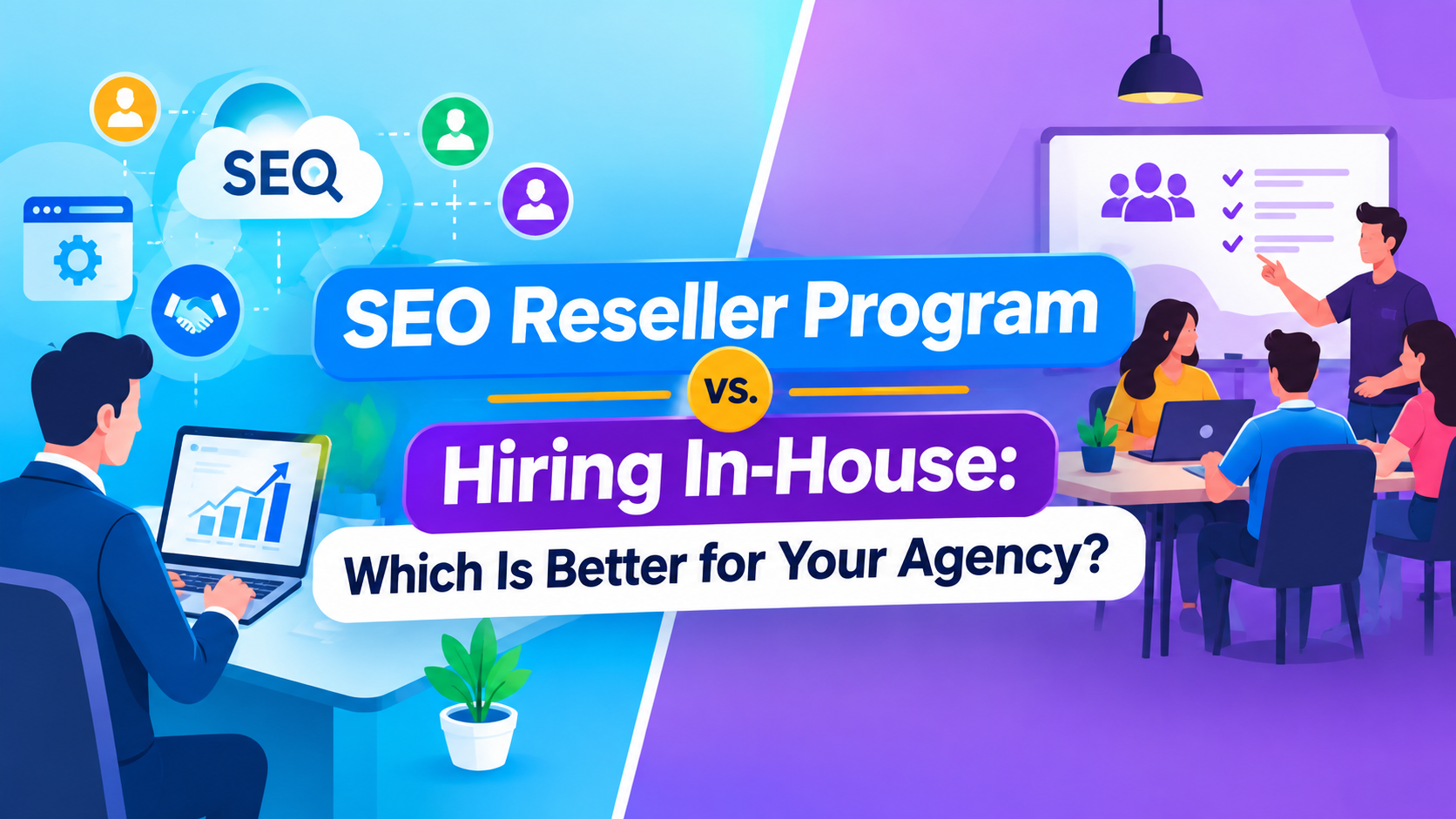
For many business owners, managing all of this internally is difficult. Hiring an external SEO team can provide access to specialized skills without the cost and complexity of building a large in-house department.
India has become an important destination for businesses looking for SEO expertise. The country offers a large pool of digital marketing professionals, competitive service costs, and experience working with businesses across different industries and international markets.
However, choosing the right partner requires more than comparing monthly prices. The wrong agency can waste your budget, create low-quality content, or use tactics that damage your website’s long-term visibility. The right partner, on the other hand, can become an extension of your marketing team and contribute meaningfully to business growth.
This guide explains what business owners should consider before selecting an SEO partner in India.
1. Start With Your Business Goals
Before contacting an SEO company, identify what you actually want SEO to accomplish.
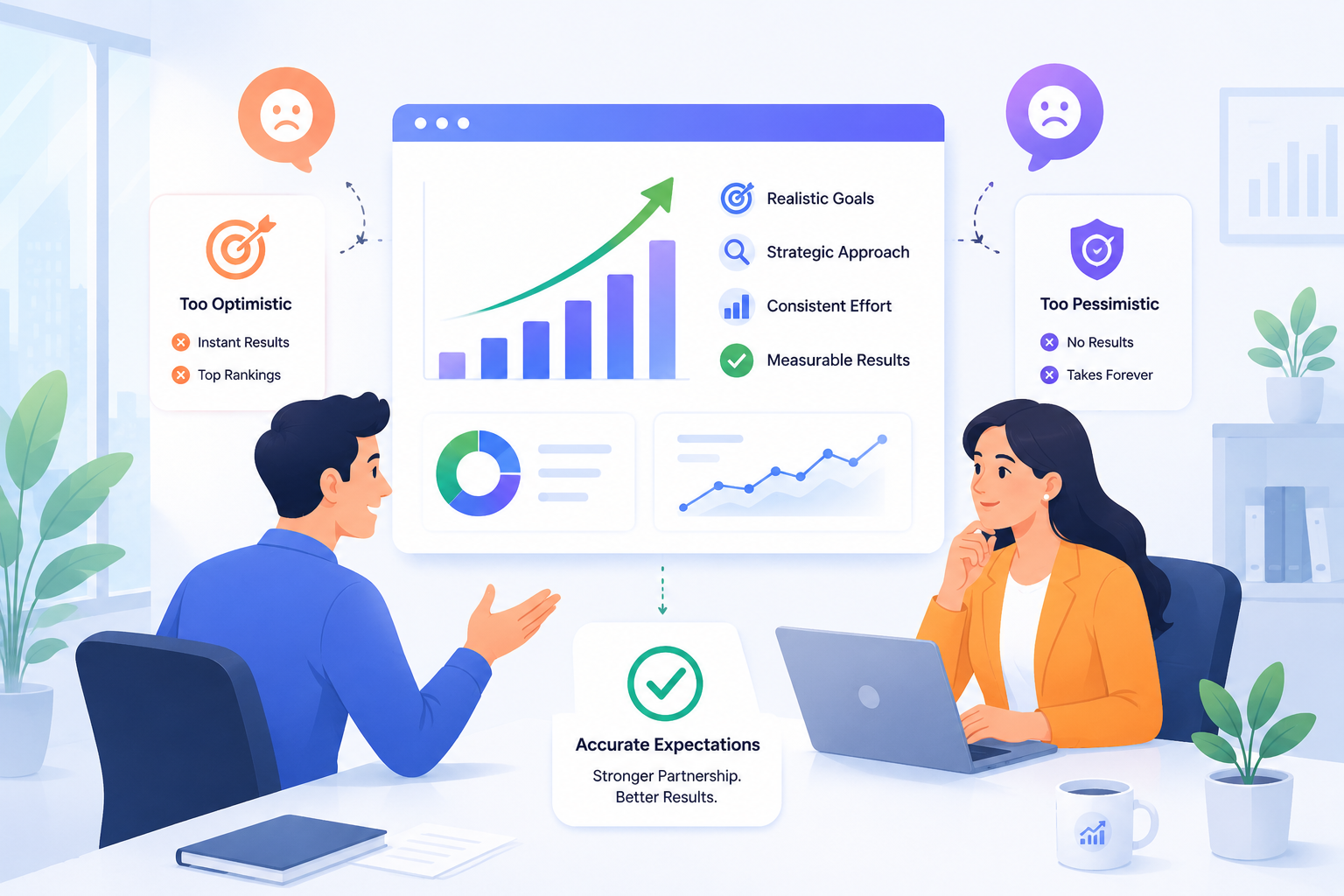
“Improve rankings” is not a complete business goal. Search rankings matter, but they are only one part of the equation.
Your objectives might include:
- Increasing qualified organic traffic
- Generating more leads
- Growing online sales
- Improving visibility in a particular location
- Entering a new international market
- Increasing traffic to specific product or service pages
- Building authority in a particular industry
- Reducing dependence on paid advertising
For example, an e-commerce company may prioritize product visibility and online revenue, while a B2B company may focus on generating qualified enquiries. A local business may care more about map visibility and location-based searches.
A good SEO outsourcing in India partner should ask questions about your business, customers, competitors, products, sales cycle, and existing marketing strategy before recommending a campaign. This ensures the SEO strategy is tailored to your specific goals rather than relying on a generic approach.
If an agency immediately presents a generic package without understanding your objectives, consider that a warning sign.
2. Look Beyond the Price
Cost is naturally an important consideration, particularly for small and growing businesses. One advantage of working with an India-based SEO team can be access to skilled professionals at a potentially more competitive cost than hiring equivalent resources in some other markets.
But choosing the cheapest provider can become expensive in the long run.
SEO requires time and expertise. Extremely low-cost packages may rely heavily on automated content, low-quality backlinks, inexperienced staff, or standardized strategies that are not tailored to your website.
Instead of asking, “Who offers the lowest monthly fee?” ask:
“What am I getting for the investment, and how does it contribute to my business goals?”
Compare agencies based on strategy, expertise, communication, reporting, technical capabilities, content quality, and expected deliverables.
A slightly higher investment in a capable team can be more valuable than a cheap campaign that produces little meaningful business growth.
3. Examine Their SEO Experience
Experience does not necessarily mean an agency has been operating for a particular number of years. More important is whether the team has experience solving problems similar to yours.
Ask potential partners:
- Which industries have you worked with?
- Have you worked with businesses in my target market?
- Do you have experience with international SEO?
- Have you handled websites of a similar size?
- Can you share examples of previous campaigns?
- What SEO challenges have you successfully solved?
Industry experience can be especially useful because different sectors have different search behaviors and competitive environments.
For example, SEO for a software company can involve long-form educational content and complex buyer journeys, while SEO for a local service provider may depend heavily on location-based searches, reviews, and service pages.
A strong partner should be able to explain how its previous experience is relevant to your situation rather than simply presenting a list of client logos.
4. Ask for Realistic Case Studies
Case studies can help you understand how an agency approaches SEO.
Look for evidence that demonstrates more than an increase in keyword rankings. Ideally, a case study should explain:
- What problem the client faced
- What strategy was implemented
- What changes were made
- How long the campaign took
- What measurable results followed
- How those results affected business performance
Be cautious of impressive-looking screenshots that show dramatic ranking improvements without context.
A keyword moving from position 80 to position 10 may look impressive, but it does not necessarily mean the business generated significant revenue from that term.
Better indicators include qualified organic traffic, leads, conversions, revenue, visibility across important topics, and improvements in the overall quality of search traffic.
Also remember that SEO results depend on the website, industry, competition, market, content quality, and starting position. A credible agency should be comfortable discussing these variables.
5. Understand Their SEO Process
A professional SEO campaign should have a logical process.
While the exact approach will vary, a comprehensive campaign often includes:
Website Audit
The team evaluates technical issues, indexing, site structure, page performance, internal linking, metadata, mobile usability, and other factors that can affect search visibility.
Keyword and Search Intent Research
Instead of simply collecting high-volume keywords, the team should identify searches that are relevant to your products, services, customers, and business objectives.
Competitor Analysis
Understanding which competitors dominate search results can reveal content gaps, backlink opportunities, technical strengths, and areas where your business can differentiate itself.
On-Page Optimization
Important pages may require improvements to titles, headings, content structure, internal links, media, metadata, and search intent alignment.
Content Strategy
A strong strategy should focus on creating useful resources that answer genuine customer questions and support the buyer journey.
Technical SEO
Technical work may include addressing crawlability, indexation, site architecture, redirects, structured data, duplicate content, and performance-related issues.
Authority Development
Depending on the campaign, the agency may pursue legitimate opportunities to earn relevant mentions, references, digital PR coverage, or industry links.
If an agency cannot clearly explain what it plans to do and why those activities matter, ask more questions before signing an agreement.
6. Pay Close Attention to Their Link-Building Approach
Backlinks remain an important component of SEO, but not all links are equally valuable.
This is an area where business owners should be particularly careful.
Some providers promise hundreds or thousands of backlinks every month. Large numbers may sound attractive, but SEO is not a competition to accumulate as many links as possible.
Poor-quality or manipulative link-building practices can create risks for your website.
Ask the agency:
- How do you identify link opportunities?
- How do you assess website relevance and quality?
- Do you purchase links?
- How do you handle paid placements?
- Will you provide examples of the type of links you pursue?
- How do you protect clients from risky link-building practices?
A quality-focused partner should emphasize relevance, credibility, and sustainable acquisition rather than simply promising a particular number of links.
7. Evaluate Their Content Strategy
Content is another area where quality matters more than quantity.
An agency might promise 20 or 30 articles every month, but publishing large volumes of generic content will not automatically produce organic growth.
Effective content should have a purpose.
It should address real search intent, demonstrate expertise, provide useful information, and support the broader customer journey.
Ask potential partners how they research topics and determine which pages deserve attention.
You should also clarify who writes the content, who reviews it, and how the agency ensures factual accuracy and brand consistency.
If your business operates in a specialized field, subject-matter expertise becomes even more important. Generic articles may fail to communicate the knowledge and credibility customers expect.
8. Check How They Measure Success
Before signing a contract, agree on what success means.
A professional SEO partner should report on metrics that connect SEO activity with business outcomes.
Depending on your business model, useful metrics may include:
- Organic sessions
- Search visibility
- Non-branded organic traffic
- Qualified leads
- Conversion rates
- Organic revenue
- Important keyword movements
- Landing-page performance
- Click-through rates
- Search impressions
- Technical health
This does not mean every keyword must increase every month. Search performance naturally fluctuates.
The important question is whether the overall campaign is moving toward meaningful business objectives.
Be cautious if an agency focuses almost exclusively on vanity metrics or guarantees specific rankings for competitive keywords.
9. Understand How Reporting Works
Regular reporting gives you visibility into what your SEO partner is doing with your investment.
Ask how frequently reports will be delivered and whether meetings are included.
A useful report should not simply contain pages of graphs. It should explain:
- What was completed
- What changed
- What improved
- What did not improve
- What problems were discovered
- What will happen next
- Why the next actions have been selected
You should be able to understand the report without being an SEO specialist.
Transparency is particularly important when your SEO team operates remotely. Clear documentation and regular communication can help ensure that everyone remains aligned.
10. Consider Communication and Time Zones
India works with businesses across North America, Europe, Australia, the Middle East, and other regions. If your company is located outside India, establish communication expectations before the relationship begins.
Ask:
- Who will be your primary contact?
- How quickly will questions receive a response?
- Which communication channels will be used?
- How often will strategy calls take place?
- What are the team’s working hours?
- Who handles urgent technical issues?
Time-zone differences do not have to be a major obstacle if processes are well organized.
A reliable agency should have a communication system that prevents delays and keeps important decisions documented.
11. Find Out Who Will Actually Work on Your Account
During the sales process, you may speak with a senior strategist or company founder. After signing the contract, however, your account could be handled by a completely different team.
Ask who will actually perform the work.
Find out whether your account will have:
- An SEO strategist
- Technical SEO specialists
- Content writers
- Content editors
- Outreach specialists
- Developers, when necessary
- A dedicated account manager
You do not necessarily need a large team. In some cases, a smaller team of experienced specialists can deliver better results than a large group of inexperienced employees.
What matters is whether the people working on your campaign have the appropriate knowledge and accountability.
12. Check Whether You Own Your Assets
This is an often-overlooked issue.
Your business should retain control over important digital assets, including your website, domain, analytics accounts, search tools, content, and relevant business profiles.
Do not allow an agency to create critical assets entirely under accounts that you cannot access.
Before beginning the relationship, clarify:
- Who owns the website?
- Who owns the content?
- Who controls analytics?
- Who has access to search performance tools?
- Who manages business listings?
- What happens to the assets if the contract ends?
A professional agency should have no problem with reasonable ownership and access arrangements.
13. Avoid Guaranteed Ranking Promises
One of the biggest red flags in SEO is a guaranteed number-one ranking.
Search engines use complex systems that change continuously, and rankings depend on many factors outside an agency’s control.
A responsible SEO provider can establish a strategy, implement improvements, monitor results, and make adjustments. It cannot honestly guarantee that a particular page will remain in a particular position indefinitely.
Instead of looking for guarantees, look for accountability.
Ask the agency what it will do if the campaign underperforms. How frequently will the strategy be reviewed? What happens when an algorithm update changes search behavior? How will the team identify and correct problems?
Those answers are much more valuable than a ranking guarantee.
14. Review the Contract Carefully
Do not treat the contract as a formality.
Check the agreement for:
- Monthly fees
- Initial setup costs
- Contract duration
- Minimum commitment
- Cancellation terms
- Deliverables
- Reporting frequency
- Payment conditions
- Ownership of content and assets
- Responsibilities of both parties
Understand exactly what is included.
For example, if the proposal mentions technical SEO, determine whether development work is included or whether your internal developer will need to implement the recommendations.
Clear expectations at the beginning can prevent disagreements later.
15. Look for a Long-Term Partner, Not Just a Vendor
SEO generally works best as a continuous growth process.
Your website will evolve. Competitors will change their strategies. Search behavior will shift. New products and services may be introduced. Search engines will continue to refine how they evaluate and display information.
That means your SEO partner should be capable of adapting.
The best relationship is not simply:
“You pay us, and we send you a monthly report.”
It should be closer to:
“We understand your business, identify search opportunities, execute the strategy, measure outcomes, and continuously improve the campaign.”
This mindset turns SEO from a disconnected marketing expense into a long-term growth channel.
Questions to Ask Before Hiring an SEO Company in India
Before making your final decision, consider asking each shortlisted provider these questions:
- What is your approach to SEO for businesses in my industry?
- What would you prioritize during the first three months?
- How do you conduct keyword and competitor research?
- How do you approach technical SEO?
- How do you develop content strategies?
- What is your approach to link acquisition?
- How do you measure campaign performance?
- What reporting will I receive?
- Who will manage my account?
- Can you provide relevant case studies?
- What access will I have to reports and accounts?
- What happens if I decide to end the partnership?
- How do you respond to major search algorithm changes?
- What do you need from my team?
- What results should I realistically expect?
The answers will reveal much more than a sales presentation.
Final Thoughts
Choosing the right SEO partner in India is ultimately a business decision, not simply a marketing decision.
The right provider should combine technical knowledge, strategic thinking, quality content, ethical practices, transparent reporting, and strong communication. An Ultimate Guide to Outsource SEO should also emphasize that the right agency understands rankings are a means to an end—not the end itself—and focuses on turning organic visibility into meaningful business results.
Take time to compare potential partners based on their process, experience, communication style, reporting, and ability to connect SEO activity with measurable business outcomes.
Do not choose an agency simply because it promises the fastest results or the largest number of backlinks for the lowest price. Sustainable organic growth usually comes from consistent improvements made over time.
A good SEO partner should be willing to understand where your business is today, where you want it to go, and how search can help you get there.
When you approach the selection process with the right questions and realistic expectations, working with an India-based SEO team can become more than an outsourcing arrangement. It can become a strategic partnership that strengthens your online presence, attracts better prospects, and creates a more sustainable source of business growth.