

 English




















































































































































































































































































































































































































































































































































































































































































































































































































































































































































































































































































































































































































































































































































































































































































































































































































































































Constant, Primary-Secondary or Variable Primary: Flow Choices in Chilled Water Systems

A chiller plant sized for the hottest afternoon of the year spends most of its life below that load. The question is what the pumps do the rest of the time. The answer shapes both energy use and how the plant behaves.
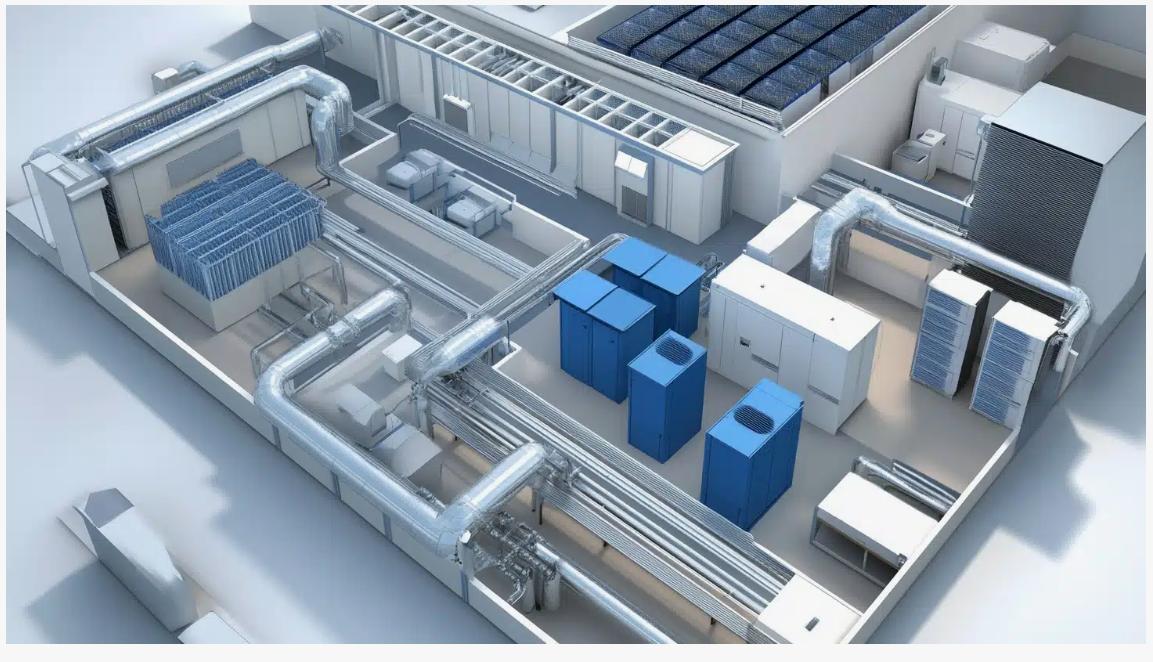
Three pumping arrangements dominate the conversation around chilled water systems. Each handles part load differently, and each has a typical weak spot. Knowing the trade-offs helps owners read an engineer’s recommendation with confidence.
Constant flow, simple and steady
In a constant-flow loop, pumps move the same amount of water whether the building needs little cooling or a lot. Three-way valves at the coils send unused water around the coil instead of through it.
The design is easy to understand and operate. The cost is pumping energy that does not fall with the load. Return water also tends to arrive cooler than it should.
Primary-secondary, two loops and a bridge
This arrangement splits the work. Constant-speed primary pumps keep a steady flow through each chiller. Secondary pumps serve the building and can vary their flow.
A short common pipe, often called the decoupler or bridge, joins the two loops. When secondary flow exceeds primary flow, return water moves backward through the bridge and mixes into the supply. Supply temperature then rises, and the plant may need to start another chiller.
Variable primary, one set of pumps
Here a single set of variable-speed pumps serves both the chillers and the building. There is no separate secondary loop. Fewer pumps can mean less equipment to buy and maintain.
The catch is control, because a chiller needs a minimum flow through its evaporator. A design guideline from the University of Michigan calls for variable primary pumping. It adds a controlled bypass to protect that minimum.
The guideline also advises a flow meter for the control. It cautions against oversizing the bypass valve.
The low delta-T problem
Delta T is the gap between supply and return water temperature. A wide gap means each gallon carries more heat. For the same cooling load, a 10°F gap needs 40 percent more flow than a 14°F gap.
Low delta T appears when return water is too cool. Often cited contributors include three-way valves, fouled coils and control valves that pass more water than needed. The same university guideline asks for a delta T of at least 14°F on plants serving new buildings.
It also replaces three-way valves with two-way valves when an existing building is converted to variable flow. Low delta T hurts every arrangement. It makes the pumps move more water than the load requires.
What a mild spring day does to the pumps
Picture a mild day when a building needs about 30 percent of its peak cooling. A constant-flow loop still circulates full flow. A variable arrangement slows the pumps and moves less water.
Pump power drops much faster than flow when speed is reduced. That is why variable speed gets so much attention.
The benefit still depends on the loop holding a healthy delta T. A weak delta T keeps the pumps busy.
Where each arrangement tends to fit
Constant flow still appears in small plants and older buildings where simplicity matters most. Its weakness is the cost of operation.
Primary-secondary suits plants with several chillers and varied loads, and many operators know it well. Its weakness is the bridge, which can hide flow imbalances until supply temperature rises.
Variable primary suits plants with strong controls and well-kept coils. Its weakness is sensitivity to control settings, so commissioning and tuning matter.
Habits that protect delta T in any plant
- Keep coils clean and confirm that control valves close fully.
- Set supply temperature with intent, not just by habit.
- Trend supply and return temperatures across the seasons.
- Size control valves for the real flow, not for a padded estimate.
- Recheck performance after any coil or valve replacement.
Most building automation systems already log these temperatures. Reading the trends each quarter is a low-cost habit.
Questions to settle before choosing
- How much of the year does the plant run at part load?
- Do the existing coils and valves support a wide delta T?
- Can the controls hold minimum chiller flow reliably?
- Who will maintain the plant, and how comfortable are they with the controls?
- How easily could the plant expand later?
No single arrangement wins everywhere. A retrofit full of three-way valves faces different limits than a new campus plant. A good engineer will show part-load behavior, not only the design day.