

 English






















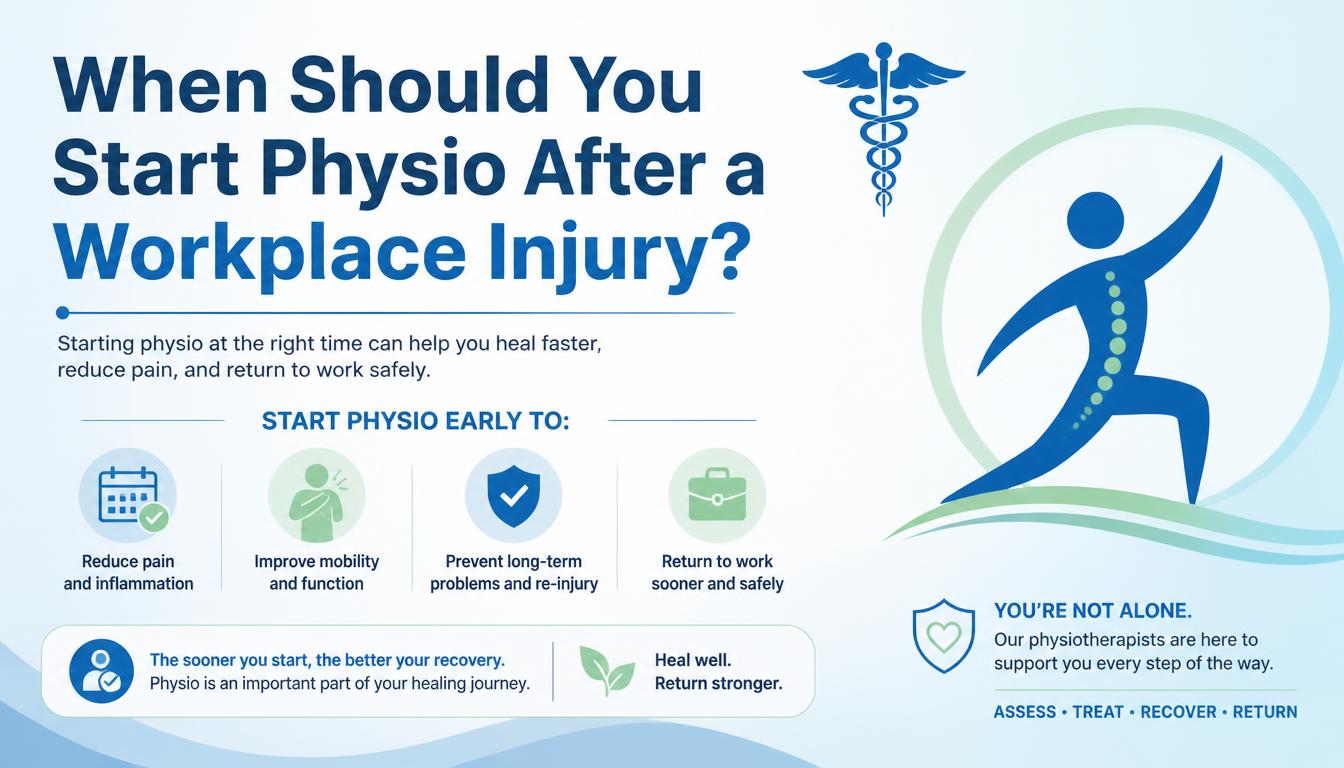



































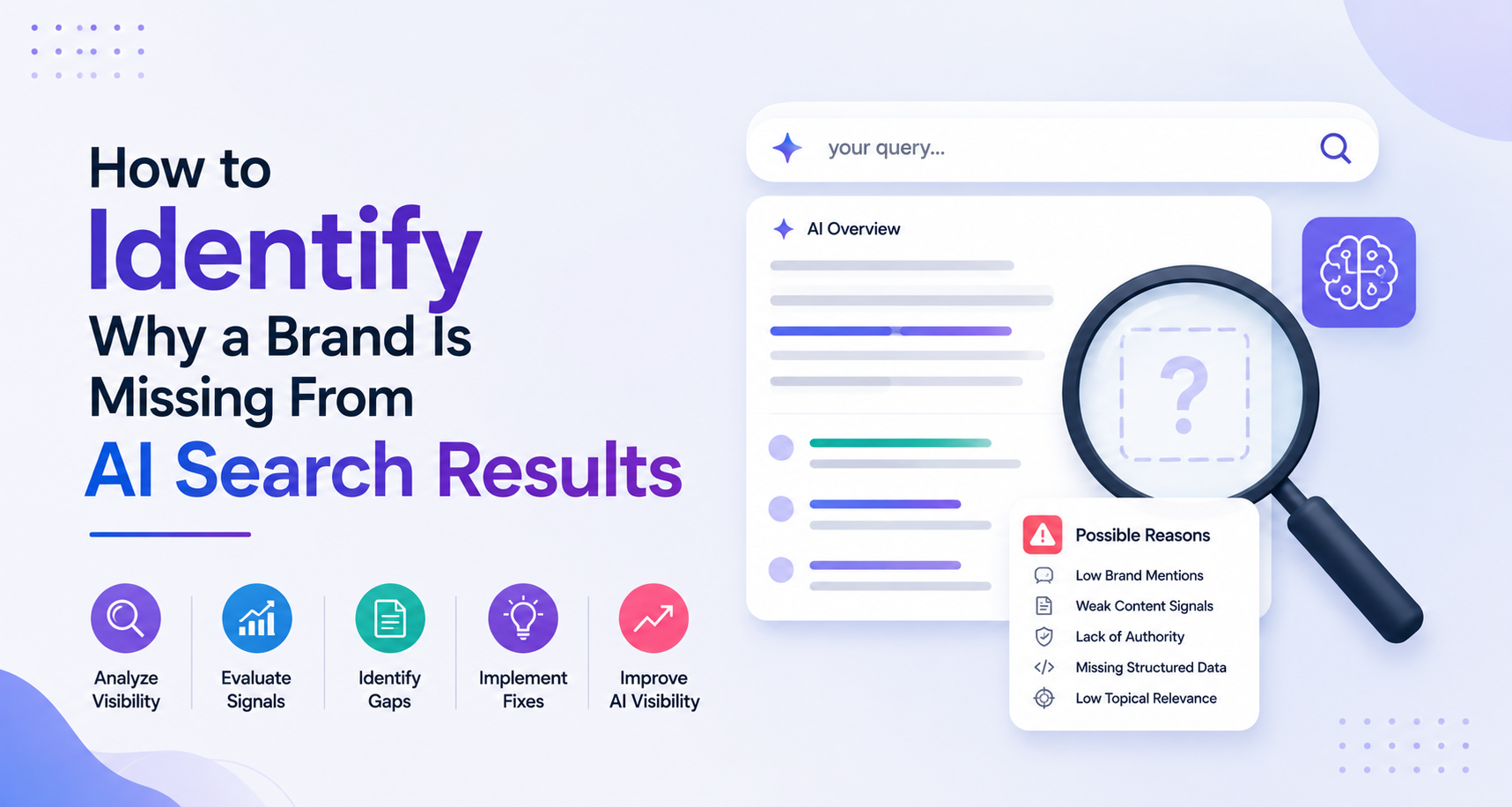
















































































































































































































































































































































































































































































































































































































































































































































































































































































































































































































































































































































































































































































































































































































































































































































































































































































What SEO Strategies Help Healthcare Websites Get Patients?

Today, most patients start their healthcare journey online. They search for medical information, doctors, or nearby clinics. Search engines are key tools for linking patients to healthcare providers. Healthcare organizations need to boost their online visibility. This change helps them connect with potential patients more effectively.
Search engine optimization (SEO) is key for healthcare websites. It helps them appear in search results when people look for medical services or health info. A solid SEO strategy boosts website traffic. It also builds trust and credibility with patients. Healthcare SEO needs a special approach. This is due to sensitive information, strict rules, and the need for high trust.
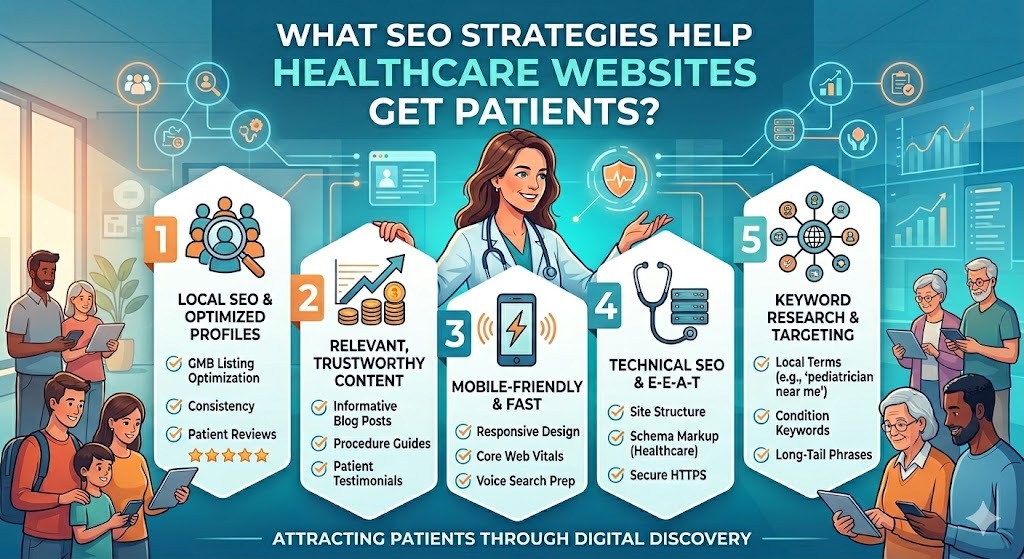
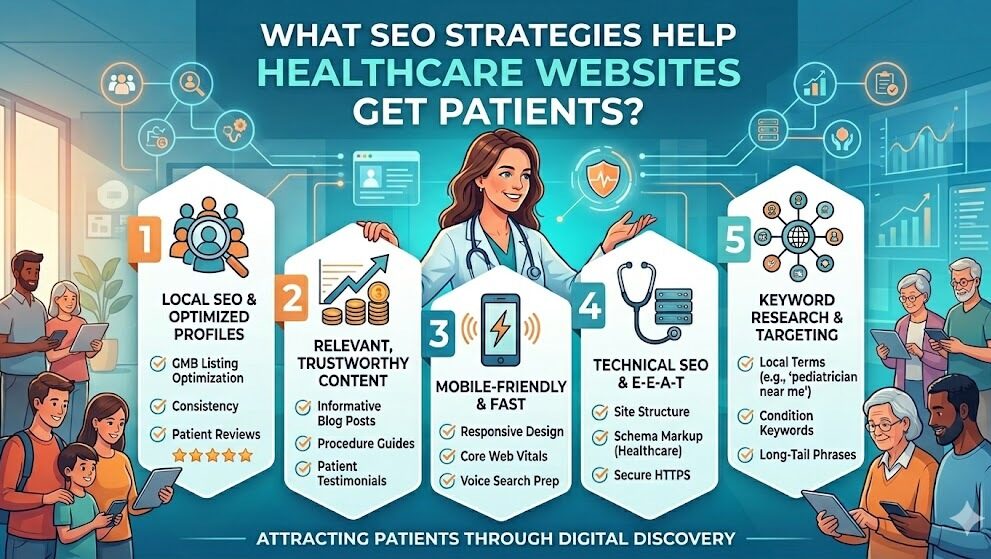
Effective strategies help healthcare websites attract more patients and boost their online visibility. Here are some simple SEO strategies for healthcare businesses. They can help increase visibility. Plus, they engage patients better.
Understanding the Importance of Healthcare SEO
Healthcare SEO boosts medical websites to rank better in search engines. This helps users find healthcare services, treatments, or medical advice easily. Many patients search online for healthcare providers. So, showing up at the top of search results can really impact how many patients you attract.
Effective SEO helps healthcare organizations:
- Increase website visibility in search results
- Build trust and credibility with potential patients
- Provide helpful information to people seeking medical guidance
- Improve online appointment bookings
- Strengthen brand authority within the healthcare industry
Many organizations depend on medical SEO specialists. These experts know healthcare marketing’s unique needs. This includes compliance, accurate content, and building patient trust.
Conducting Effective Keyword Research
Keyword research is the foundation of any successful SEO strategy. It means finding the words patients use. They search for healthcare services or medical information.
Healthcare websites should target keywords that match patient needs. This includes terms like symptoms, treatments, conditions, and local healthcare services.
Some examples include:
- Doctor near me
- Pediatric clinic in [city]
- Treatment for back pain
- Dermatology services
- Best dental clinic nearby
Using these keywords in your website helps search engines find its relevance. This way, they can match it with what users are searching for.
Healthcare SEO must focus on accuracy and relevance. It’s not about adding keywords to content.
Creating High-Quality and Informative Content
High-quality content should:
- Address common patient questions
- Provide clear explanations of medical conditions
- Offer helpful health tips and preventive care advice
- Highlight services offered by the healthcare provider
Common content formats include:
- Educational blog articles
- Frequently Asked Questions (FAQs)
- Treatment guides
- Patient resource pages
- Medical news and updates
Search engines look for content that shows expertise, authority, and trustworthiness. This is very important for healthcare topics.
Optimizing Website Structure and User Experience
A well-structured website is easier to navigate. It helps both users and search engines find their way. Patients on healthcare websites should easily find what they need. This includes services, doctor profiles, and appointment booking options.
Important website optimization elements include:
- Clear navigation menus for easy browsing
- Mobile-friendly design for smartphone users
- Fast loading speed to improve user experience
- Secure website connections (HTTPS) for patient data protection
- Simple appointment scheduling systems
User experience is closely linked to SEO performance. When visitors spend time on a website, it shows they like the content. Search engines then think the site is valuable and relevant.
Local SEO for Healthcare Providers
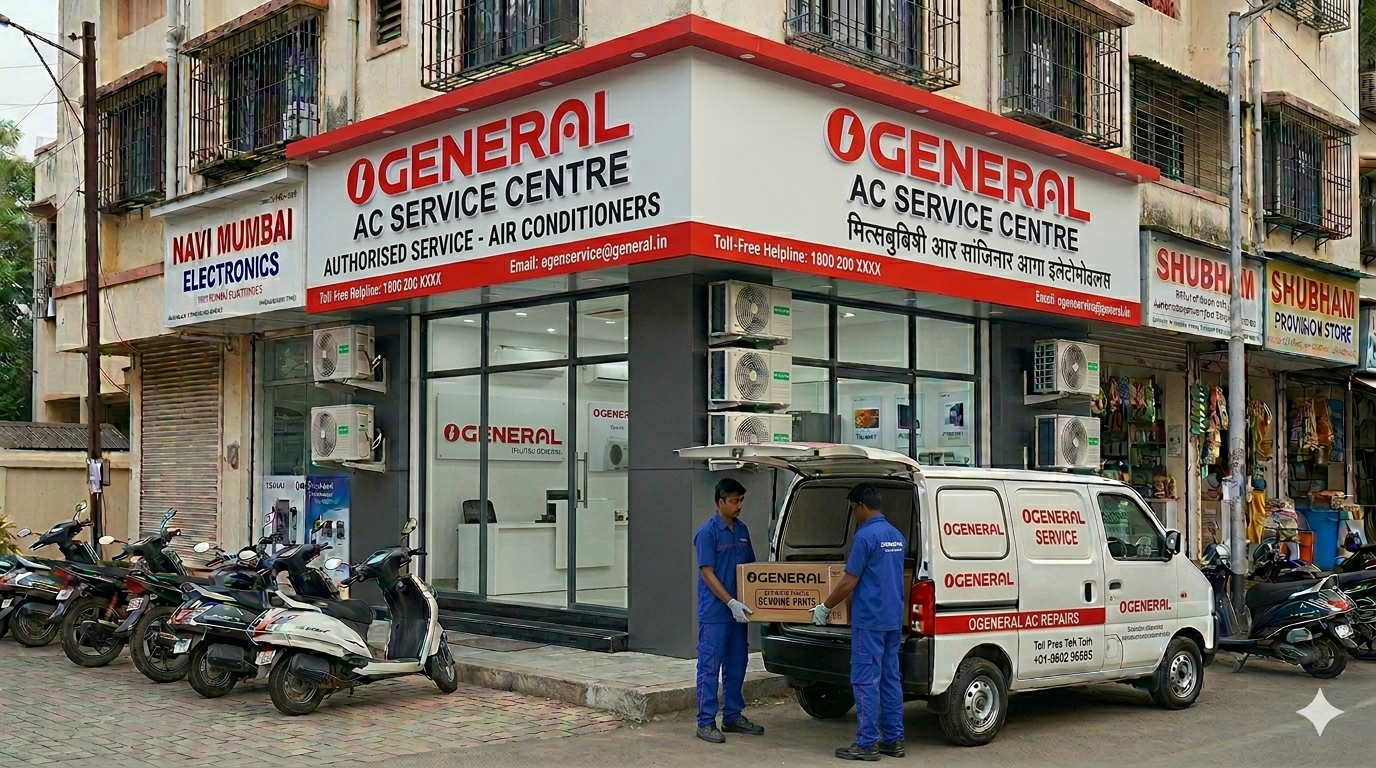
Local search optimization is crucial for healthcare businesses. Patients usually look for medical services close to them.
Local SEO strategies help healthcare providers show up in local search results. This happens when users look for nearby services.
Key local SEO practices include:
- Creating and optimizing a Google Business Profile
- Ensuring accurate contact details and clinic addresses
- Adding clinic photos and service descriptions
- Encouraging satisfied patients to leave reviews
- Using location-based keywords in website content
Positive patient reviews and correct location details boost visibility in local search results.
Building Trust Through Authoritative Backlinks
Backlinks are links from other websites that point to your healthcare website. They signal to search engines that your content is credible and valuable.
However, in healthcare SEO, quality matters far more than quantity. Links should come from reputable and trustworthy sources.
Examples of strong backlink opportunities include:
- Healthcare directories
- Medical journals and publications
- Professional associations
- Educational institutions
- Health blogs and reputable media outlets
Links from trusted websites improve search engine rankings. They also build the healthcare organization’s credibility.
Technical SEO for Better Performance
Technical SEO makes sure a website works well. It helps search engines crawl and index the site easily. Even high-quality content may struggle to rank if the website has technical issues.
Some essential technical SEO practices include:
- Improving website loading speed
- Fixing broken links and errors
- Optimizing image sizes
- Creating XML sitemaps
- Ensuring mobile compatibility
Technical improvements help search engines understand a website’s structure. This leads to better search performance.
Using Structured Data for Healthcare Websites
Structured data, or schema markup, helps search engines better understand website content. It provides more information about services, doctors, reviews, and medical organizations.
Structured data helps healthcare websites rank higher in search results, like rich snippets.
Examples of structured data for healthcare websites include:
- Medical organization schema
- Doctor Profile Schema
- Patient review ratings
- Appointment booking information
These enhancements improve visibility and make search listings more informative for potential patients.
Maintaining Compliance and Medical Accuracy
Healthcare websites must ensure their content is accurate, ethical, and follows medical guidelines. Incorrect or misleading health information can damage trust and harm search rankings.
Content should ideally be reviewed by qualified medical professionals to maintain credibility. Clear disclaimers and transparent policies also help prove responsibility and professionalism.
Tracking Performance and Continuous Improvement
SEO isn’t a one-time task; it needs regular checks and updates to keep performing well in search results.
Healthcare organizations should regularly track metrics such as:
- Website traffic from search engines
- Keyword rankings
- Patient inquiries and appointment bookings
- User engagement and bounce rates
Reviewing these metrics shows where to improve and sharpens the SEO strategy.
To stay visible online, update content, upgrade technology, and launch new marketing efforts.
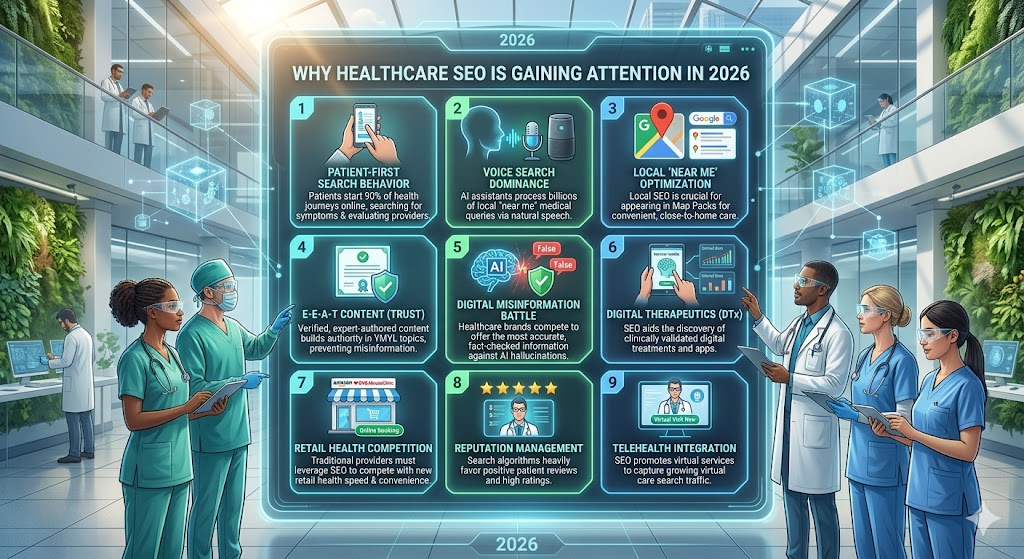
The Future of SEO in Healthcare
The healthcare industry continues to evolve as digital technology advances. Search engines are improving at assessing the quality and trust of health content.
Emerging trends shaping healthcare SEO include:
- Voice search optimization for health queries
- AI-powered healthcare search experiences
- Personalized health information delivery
- Greater emphasis on authoritative medical content
Healthcare providers who adapt will connect better with patients online. This helps build lasting relationships.
Final Thoughts
SEO is crucial in today’s healthcare marketing. More patients are looking online. They search for providers, treatments, and medical info. Boosting online visibility means using strategies like keyword research, quality content, local SEO, technical fixes, and link building.