

 English


































































































































































































































































































































































































































































































































































































































































































































































































































































































































































































































































































































































































































































































































































































































































































































































































































































How AI Is Transforming Mobile App Development And What Developers Need to Do About It

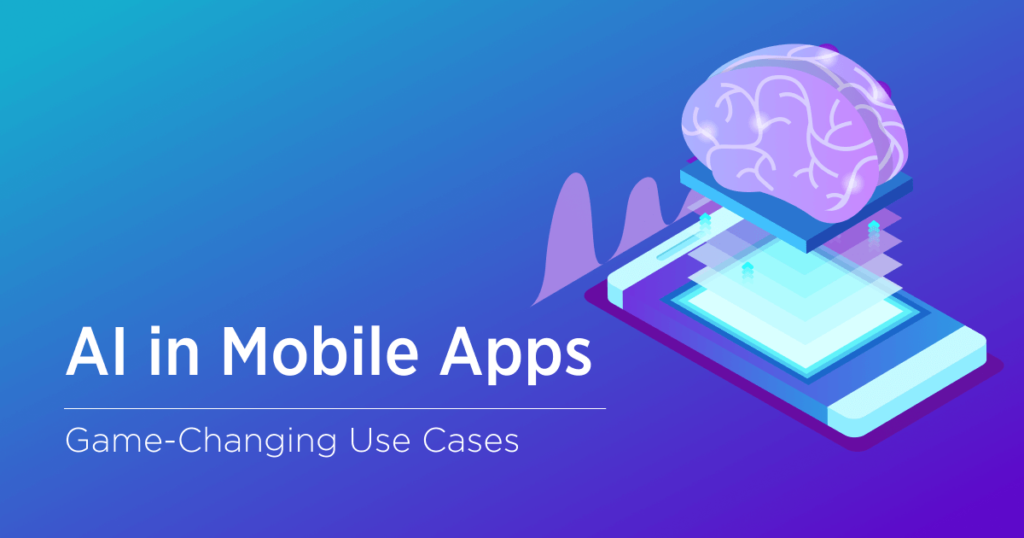
Mobile app development has always been fast-moving. But the arrival of practical, production-ready artificial intelligence has changed the game in ways that go far beyond adding a chatbot to your app. AI is now embedded in how apps are designed, built, tested, deployed, and maintained — and developers who understand this shift are pulling ahead fast.
Whether you are an individual developer, a startup, or a custom mobile app development company, understanding how AI is changing the development landscape is no longer optional. It is the difference between staying relevant and falling behind.
This guide breaks down exactly how AI is transforming mobile app development, what it means for developers today, and the practical steps every team needs to take to adapt.
What Does AI in Mobile App Development Actually Mean?
Before diving into specifics, it is important to be clear about what AI in mobile app development actually refers to. It is not just about building AI-powered apps. It is about using AI as a tool inside the development process itself — and also about delivering AI-driven features to end users.
There are two sides to this:
AI as a development tool — AI assists developers in writing code faster, generating tests, reviewing pull requests, spotting bugs, and automating repetitive tasks. Tools like GitHub Copilot, Cursor, and Tabnine have made this mainstream.
AI as a product feature — Apps themselves now offer smarter experiences. Personalized feeds, voice interfaces, on-device machine learning, predictive text, fraud detection, and real-time recommendations are all AI features that users now expect from modern apps.
Both sides are reshaping what it means to build a mobile app — and both matter deeply for any custom mobile app development company trying to deliver competitive products.
How AI Is Changing the Core Development Process
1. AI-Assisted Code Generation
One of the most visible changes is in how developers write code. AI coding assistants can now generate entire functions, suggest completions as you type, and even write boilerplate from a simple description.
For a custom mobile app development company, this has a real impact on speed. Tasks that once took hours — writing API wrappers, setting up navigation structures, creating form validation logic — can now take minutes when an AI assistant is doing the heavy lifting.
But speed is only part of the story. AI coding tools also help catch common mistakes early, suggest better approaches, and reduce the cognitive load on developers so they can focus on the harder architectural decisions that actually require human judgment.
The key shift is that developers are becoming reviewers and directors of AI-generated code rather than pure writers of every line. This requires a different skill set — one focused on judgment, architecture, and knowing when to trust AI output and when to override it.
2. Automated Testing and Quality Assurance
Testing has historically been one of the most time-consuming parts of mobile development. Writing unit tests, integration tests, and UI tests requires significant effort — and it is often the first thing that gets cut when timelines are tight.
AI is changing this by making test generation faster and smarter. Modern tools can analyze code and automatically generate test cases, including edge cases that a human developer might not think to include. Some tools can even simulate how users interact with an app and surface UX issues before any real user ever touches it.
For mobile development specifically, this is significant. Cross-platform testing, device fragmentation, and OS version differences have always made QA complex. AI-powered testing tools are now helping teams cover more ground with less manual effort.
3. Smarter Design and Prototyping
Design-to-code workflows are being completely transformed. Tools like Figma with AI plugins, and newer platforms built specifically for AI-assisted design, can now take a wireframe or even a rough sketch and generate working UI components.
For a custom mobile app development company, this compresses the time between ideation and prototype. Stakeholders can see functional versions of their ideas faster, which leads to better feedback loops and fewer expensive misunderstandings late in the project.
AI-generated design suggestions are also helping non-designers make better decisions earlier. Color palettes, layout options, accessibility warnings, and component recommendations can all come from AI before a single pixel is finalized.
4. Predictive Development and DevOps
AI is also entering the DevOps layer. Predictive analytics tools can now forecast where deployment failures are likely, identify which code changes carry the highest risk, and recommend rollout strategies based on past patterns.
For mobile apps specifically, where a bad deployment can affect millions of users and a negative App Store review spike can hurt discoverability, this kind of predictive safety net is genuinely valuable. Teams using AI in their CI/CD pipelines are catching more issues before they reach production.
AI Features That Users Now Expect in Mobile Apps
Beyond the development process itself, AI has also raised the bar for what users expect from the apps they use daily. A custom mobile app development company that wants to build products people love needs to understand which AI features have become table stakes and which remain differentiators.
Personalization at Scale
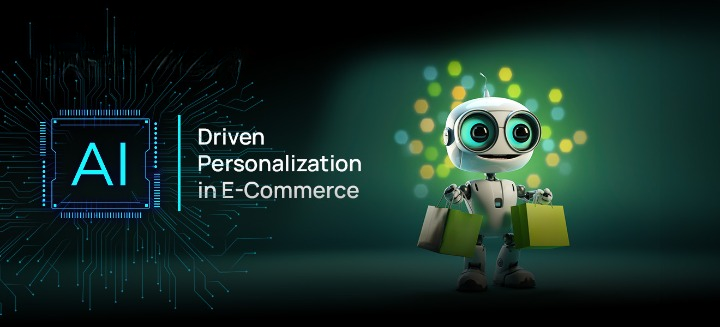
Recommendation engines, personalized feeds, and adaptive interfaces are now expected in most consumer apps. Users expect an app to learn from their behavior and present relevant content, products, or actions without them having to search for it manually.
Delivering this well requires on-device or cloud-based ML models, proper data collection architecture, and thoughtful UX design that makes personalization feel helpful rather than intrusive.
Natural Language and Voice Interfaces
Voice search, voice commands, and conversational UI are becoming standard in many app categories. Fitness apps, productivity tools, e-commerce platforms, and healthcare apps are all using natural language processing to create faster, hands-free workflows for users.
Building voice interfaces requires integrating speech recognition APIs, training intent models, and designing conversation flows — all skills that are becoming core competencies for mobile development teams.
On-Device AI and Privacy-First Machine Learning
One of the most important shifts in mobile AI is the move toward on-device inference. Rather than sending user data to a server for processing, on-device models run entirely on the user’s phone — which is faster, works offline, and respects user privacy.
Apple’s Core ML and Google’s ML Kit make this accessible even for teams without deep ML expertise. For a custom mobile app development company, understanding how to integrate these frameworks is increasingly important because clients are asking for privacy-first AI features.
Intelligent Notifications and Behavioral Prediction
Notification fatigue is real. Users ignore apps that spam them with irrelevant alerts. AI-powered notification systems analyze user behavior patterns to determine the best time to send a message, the best format to use, and whether to send it at all.
Apps that use predictive engagement see better retention rates, higher open rates, and lower uninstall rates. Getting this right requires machine learning models trained on engagement data — another area where AI expertise is becoming a competitive advantage.
What Developers and Development Teams Need to Do Now
Understanding that AI is transforming mobile development is one thing. Knowing what to actually do about it is another. Here are the concrete actions that matter most.
Learn to Work With AI Tools, Not Around Them
The developers who will thrive are not the ones who resist AI coding tools out of principle. They are the ones who learn how to get the best output from these tools — how to write effective prompts, how to review AI-generated code critically, and how to integrate AI assistance into a workflow without losing speed or quality.
This means treating AI like a fast junior developer. It can do a lot of work quickly, but it needs direction and oversight. The senior developer’s job is to set the architecture, review the output, and make sure the final code meets the team’s standards.
Build a Working Knowledge of Machine Learning Concepts
You do not need to be a data scientist to build AI-powered mobile apps. But you do need to understand the basic concepts — training vs. inference, supervised vs. unsupervised learning, model accuracy and evaluation, overfitting, and how to work with pre-trained models.
This knowledge lets you make good decisions about which AI features to build, how to evaluate the tools you are integrating, and how to communicate clearly with ML engineers or data science teams when you are working alongside them.
Prioritize Data Architecture Early
AI features are only as good as the data that powers them. If you want to build personalization, recommendations, or behavioral prediction into your app, you need to think about data collection, storage, and privacy from the very beginning of the project.
A custom mobile app development company that gets this right — building clean, well-structured data pipelines from the start — will have a much easier time adding or improving AI features later. Teams that bolt data architecture on after launch typically end up rebuilding significant parts of their system.
Stay Current With Platform AI Capabilities
Apple and Google are constantly expanding the AI and machine learning capabilities available to mobile developers. New APIs, improved on-device models, and expanded framework features land with every major OS release.
Making it a habit to read release notes, attend developer conferences, and experiment with new capabilities means you will know what is possible before your clients ask for it. That is a significant competitive advantage for any development team.
Embrace Ethical AI Practice
As AI features become more common in apps, the ethical dimensions of those features are getting more attention. Algorithmic bias, data privacy, transparency about AI-driven decisions, and user consent are all issues that developers need to think about proactively.
A custom mobile app development company that takes these issues seriously — building explainable, fair, privacy-respecting AI features — will build better long-term relationships with clients and users. It is also increasingly a legal requirement in many regions.
The Competitive Reality for Custom Mobile App Development Companies
The bar for what a mobile app can do has risen significantly. Users who have experienced well-designed AI features in major consumer apps now bring those expectations to every app they download — including enterprise software, niche tools, and local service apps.
This creates both a challenge and an opportunity for custom mobile app development companies. The challenge is that the technical scope of what clients expect has expanded. The opportunity is that teams with real AI integration expertise are able to charge more, deliver more value, and differentiate themselves clearly from teams that are still building static, disconnected apps.
The companies that are winning right now are those that have made AI competency a core part of their service offering — not as a buzzword on a marketing page, but as a genuine technical capability that shows up in every project they take on.
Challenges to Be Aware Of
AI Tools Are Not Infallible
AI-generated code can be wrong, outdated, or subtly broken in ways that are hard to spot. Over-relying on AI suggestions without proper code review is a real risk, especially in security-sensitive areas of an app. Human judgment and thorough review remain essential.
Integration Complexity
Adding AI features to a mobile app is not always plug-and-play. Model integration, latency management, battery consumption, and offline behavior all require careful engineering. The complexity is manageable but it needs to be planned for, not discovered at the end of a project.
Keeping Up With Change
The AI tooling landscape is moving extremely fast. What was the best approach six months ago may already be outdated. Development teams need to build learning habits and allocate time for staying current — which has real costs in terms of time and attention.
Final Thoughts
AI is not a future trend in mobile app development. It is the present reality. It is changing how code gets written, how apps get tested, how users interact with interfaces, and what clients expect from the teams they hire.
For any custom mobile app development company, the question is not whether to engage with AI — it is how quickly and how deeply. The teams that treat AI as a genuine part of their craft, that learn it seriously and apply it thoughtfully, are going to build better apps faster and deliver more value to their clients.
The developers who will lead the next decade of mobile software are the ones who see AI not as a threat or a shortcut, but as a powerful tool that rewards skill, judgment, and continuous learning.
The shift is already happening. The only real decision is whether you are going to lead it or react to it.
Frequently Asked Questions
What is the biggest way AI is changing mobile app development right now?
The most immediate impact is in the development workflow itself. AI coding assistants are helping developers write code faster, generate tests automatically, and catch bugs earlier — which compresses project timelines and reduces costs for clients.
Do I need to be a machine learning expert to build AI-powered mobile apps?
No. Most mobile developers build AI features using pre-trained models and platform APIs from Apple (Core ML) and Google (ML Kit). You need a working understanding of ML concepts, but you do not need to train models from scratch to deliver valuable AI features.
How can a custom mobile app development company differentiate itself with AI?
By building genuine AI competency into the team — not just using AI tools, but understanding how to design AI-driven features, integrate ML models, build clean data architectures, and advise clients on what is possible. This expertise shows up in the quality of products delivered and the ability to solve problems that less capable teams cannot.
Is AI going to replace mobile app developers?
No. AI is changing the nature of the work — shifting developers from writing every line of code to directing, reviewing, and improving AI-generated output. The demand for skilled developers who can architect systems, make good technical decisions, and integrate AI thoughtfully is growing, not shrinking.
What AI features are most in demand in mobile apps right now?
Personalization engines, natural language interfaces, on-device machine learning for privacy-sensitive use cases, intelligent notification systems, and AI-powered search are all highly requested features across consumer and enterprise mobile apps.
How should a development team get started with AI integration if they have no prior experience?
Start with the platform tools — Core ML for iOS and ML Kit for Android. Both offer pre-trained models for common tasks like image classification, text recognition, and language identification. Build a small internal project using one of these APIs, learn how the integration works end-to-end, and then apply that knowledge to client work.
What is the role of data privacy in AI mobile app features?
It is central. Users and regulators are increasingly scrutinizing how apps collect and use data to power AI features. On-device inference, where the model runs locally without sending data to a server, is the gold standard for privacy. Development teams should default to privacy-first AI architecture and be transparent with users about how their data is used.